July 27, 2026
•
Procurement
•
Philipp Descovich
The OEM Is Often the Only Source You Can See, Not the Only Source There Is
When a buyer defaults to the OEM, it is often because the part record shows no other source. The search for alternative suppliers for OEM spare parts starts by completing what the record knows about the part.
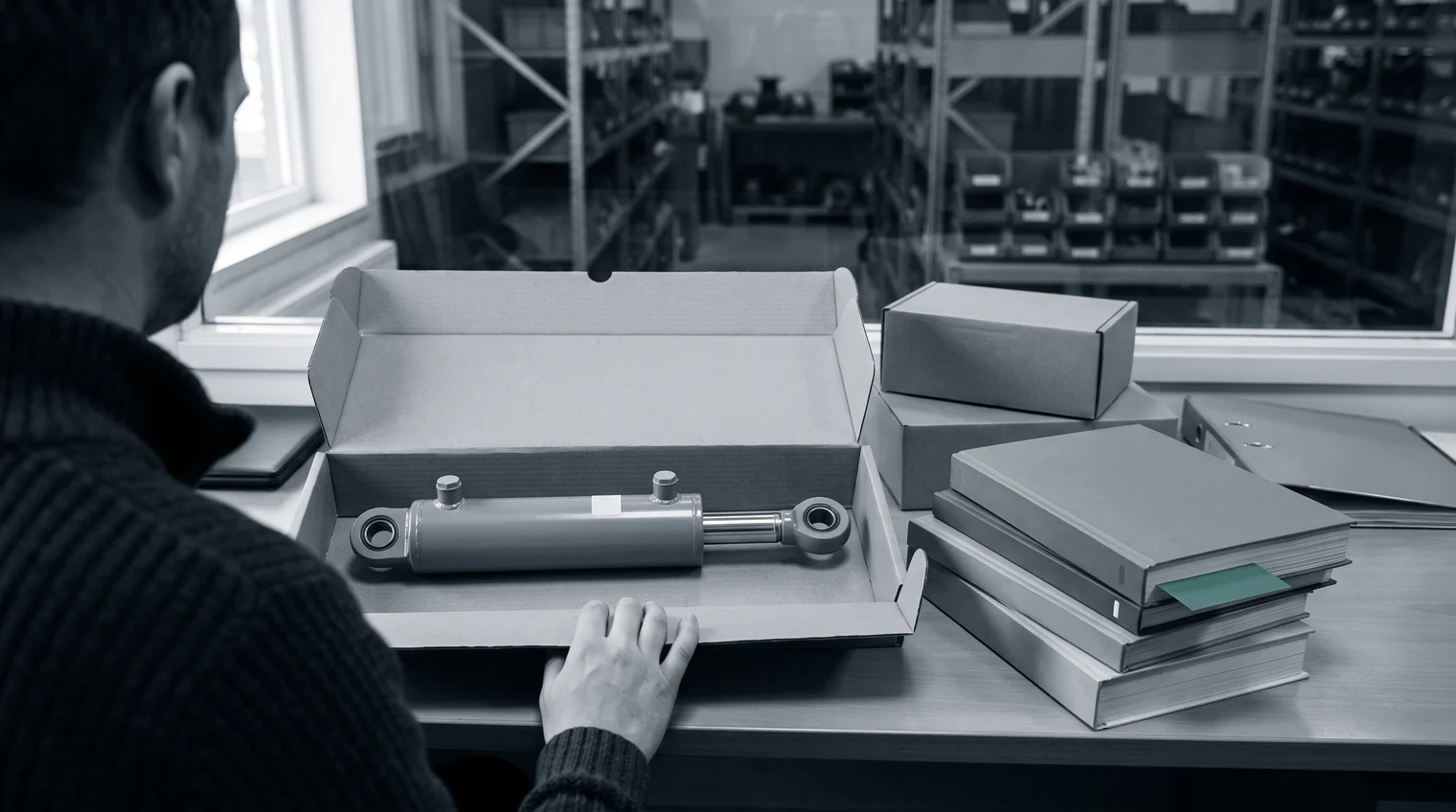
A requisition lands with the MRO buyer on a Tuesday: one hydraulic cylinder for the press line, the machine builder's part number, the machine builder's price, and a lead time that runs into next quarter. Maintenance wants it sooner, and the plant manager asks the obvious question. Is there anyone else who can supply it? The buyer opens the record and finds the machine builder's number, a short text and three past orders, all placed with the machine builder. Nothing in that record points anywhere else.
The OEM is often the right source, and often the only one you can see
To be fair to the OEM, it is frequently the right answer. It knows the machine, it has the drawings, its part is the approved one, and for a safety-relevant component there may be no sensible alternative to it. A buyer who orders from the OEM is not making a mistake.
The trouble is that the buyer often cannot tell whether this is one of those cases. Many machine builders buy components such as hydraulic cylinders from a specialist manufacturer, put their own number on them and sell them on as spare parts. If the record holds only the machine builder's number, the buyer cannot see the maker behind it, and so cannot see who else sells the same cylinder. The OEM then becomes a single source on paper, which is a statement about the record and says little about the market. Much of what plants call OEM dependency begins right there.
The search for alternative suppliers starts too late, inside the record
In most plants, the search for another source starts when the pressure is already there: a long lead time, a price that looks wrong, or a notice that the part is going out of production. By then the buyer is searching under time pressure, on supplier websites and in old files, with a record that was never built for the question. The search goes slowly, and the safe choice is to reorder from the OEM and live with the lead time.
The record decides most of that outcome before the search begins. Before looking for another supplier, it pays to check four things in the record itself:
- the manufacturer part number, and whether it is there at all
- the maker behind a dealer's or machine builder's number
- duplicates of the same part under other article numbers
- past purchases of the part under another description
Any one of these can open the market for a part. A duplicate record may show that the plant once bought the same cylinder from a hydraulics distributor at a different price. An old order may carry the manufacturer's number that the current record lost. None of these checks takes long while the record is open, and each one changes which suppliers a search can find. The better question for the buyer is whether the plant knows this part well enough to see who else can supply it.

A sourcing gap becomes a repair that waits
Supplier discovery sits with procurement, but its consequences show up in maintenance. When the only visible source quotes a lead time that long, the press line runs without a spare cylinder for all of it, and if the installed one fails in that time, the line stops until the part arrives. When a duplicate record hides a cylinder already on a shelf at another plant, the plant buys a part it already owns. The delay at the machine is described in why maintenance waits for the right part; for the buyer, the lesson is that a gap in the record becomes a risk on the shop floor.

Complete the record, then compare the sources
The cylinder requisition is one of many on the buyer's desk that week, and most of them carry the same thin record. Partium Cockpit is software for the teams who look after spare parts: maintenance and procurement. The dashboard shows what needs doing today, and the feature where you do it. For the cylinder, the buyer starts with the sources. Select the parts, and Partium Agent finds their suppliers and lead times, what each should cost, and whether it is still made.
The duplicate record behind the cylinder on the other plant's shelf belongs in the same picture. Your material master lists one part under four article numbers, at four prices. Merge them and buy at one price. Whatever the buyer finds, the next conversation with the OEM changes with it. Prepare each supplier negotiation on one page: what you buy from them, and what it should cost.
None of this promises a lower price on every part. It gives the buyer a choice where the record used to show none, and when the order goes to the OEM, it goes there because the OEM was the best option on the page. Book a demo, or ask for the demo license and run it on your own parts.
See it on your own catalog.
Book a demo, or start with a demo license.