September 17, 2026
•
Maintenance & MRO
•
Philipp Descovich
From Reactive Response to Proactive Parts Decisions
Reactive maintenance often starts long before a machine stops, in spare parts records nobody fully trusts. A plant can plan its maintenance well and still be reactive the moment a part has to be named, found and bought.
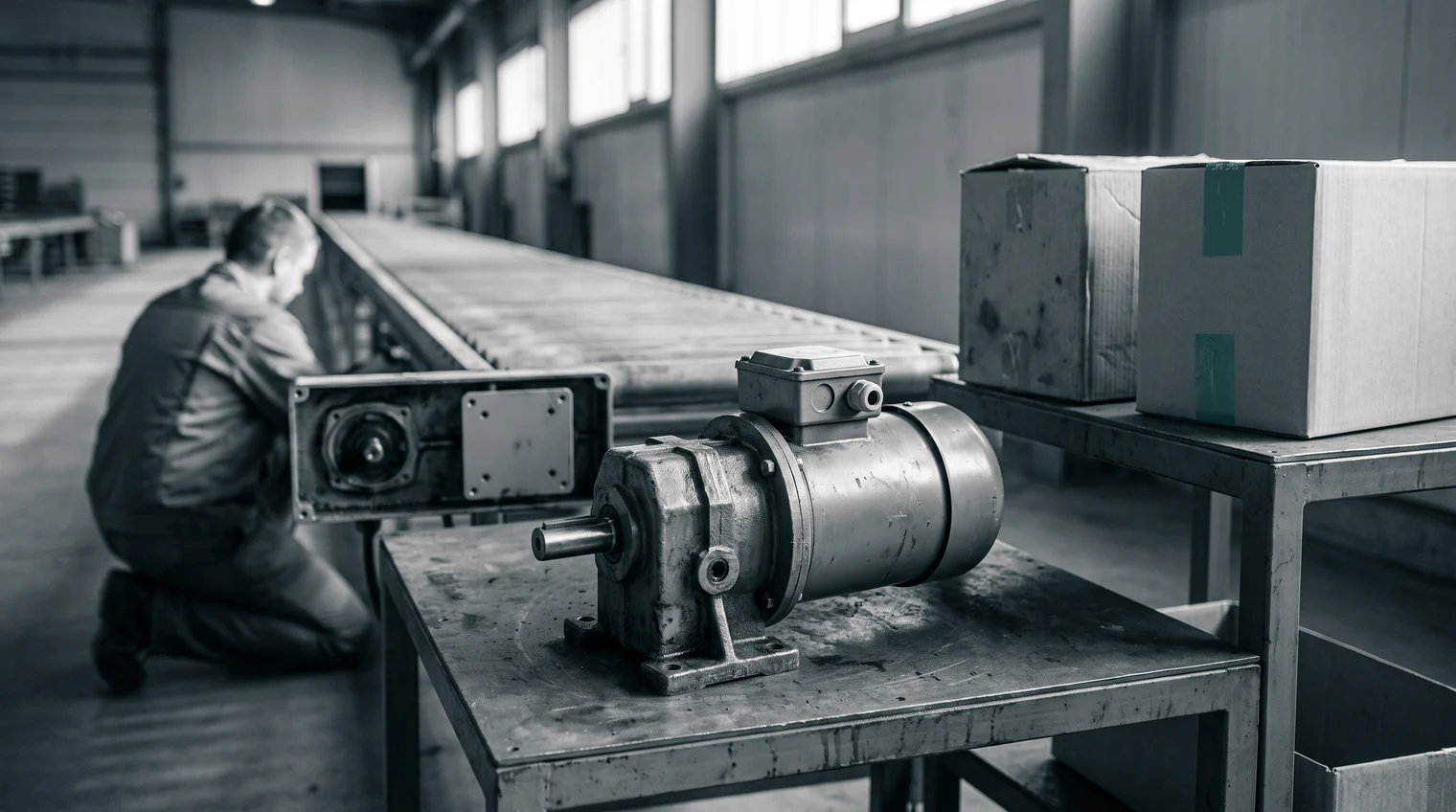
A conveyor in the dispatch hall stops on a Thursday afternoon. The gear motor that drives it has failed, and the technician needs a replacement. The ERP record for the motor has a short text, the machine builder's number and nothing else: no manufacturer part number, no gear ratio, no note of which conveyors use the same unit. The storeroom shows no stock under that number. Someone suggests asking the colleague who usually knows, and for the rest of the afternoon the plant runs on that colleague's memory.
Reactive maintenance starts with the spare part, before the breakdown
Maintenance teams are very good at getting through afternoons like this one. They search old purchase orders for the last time the motor was bought. They compare the nameplate with photos on a supplier's website. They call the OEM, wait for a callback, and in the end they reorder two motors instead of one, so that next time there is a spare. The conveyor runs again, everyone moves on, and the afternoon leaves no trace in any report.
Those workarounds keep the plant running, and they hide their own cost. Each one takes time from people who should be doing maintenance. Each one depends on someone being available. And the extra motor ordered to be safe often ends up on a shelf next to an identical one bought last year under a different article number, because nobody could find the first. The firefighting started on the day the record was created without the information that would have answered the technician's questions, long before the conveyor stopped.

Behind the workarounds is a parts-data problem
Plants tend to describe this as a maintenance problem, an inventory problem or a sourcing problem, depending on who is describing it. Underneath, it is usually the same problem: the records that describe the parts are incomplete. Short texts were written by people who understood them at the time and have since moved on. The same motor is filed under two or three article numbers, the familiar duplicates in the material master. Manufacturer numbers are missing, so nobody can tell who else sells the part. And much of what the plant knows about its parts lives in the heads of a few people who have been there for decades.
Each gap forces its own workaround. If the description is incomplete, people search by hand. If the manufacturer number is missing, they call the OEM. If duplicates hide stock, they reorder instead of checking. If the sources are unclear, they default to the one they know. Every workaround is reasonable on its own; together, they make the whole operation slower and more expensive than it looks from the maintenance plan.
Proactive in planning, reactive in execution
This is why a plant can do everything right on the planning side and still fight fires. It may run preventive maintenance by the book, schedule its shutdowns well and use condition data to predict when a machine is likely to fail, which is what proactive maintenance usually means. None of that helps if, on the day of the planned job, the part on the work order cannot be identified with confidence, is not where the system says it is, or turns out to have a lead time nobody checked. The plant is proactive in planning and reactive in execution. A planned shutdown shows it most clearly: the jobs are scheduled weeks ahead, the crews are booked, and the one part nobody checked is the reason a job slips to the next shutdown.
Being proactive about parts means something more modest and more concrete: the part decision is ready before the part is needed. When the work order is created, the team already knows what the part is, where it is stocked, what it should cost and who else can supply it. The delay at the machine described in why maintenance waits for the right part does not get the chance to start.
What a proactive parts process needs
It takes five things in the way a plant handles its parts:
- identify the part from what you have, whether a label, a few words or an old number
- complete the record's context, including the manufacturer part number
- see duplicate candidates and review them before anyone buys again
- know the sourcing options and lifecycle status before the part is urgent
- give maintenance, procurement and the storeroom one view of the part
The third item deserves a word of caution. The goal is to surface duplicate candidates so that the team can review them with the evidence in front of it, never to merge records automatically. A team that trusts the review process will act on it; a team that finds its records silently changed will stop trusting the system.
The part decision can be ready before the work order
Proactive parts work needs a place where the gaps show up before anyone is waiting on them. Partium Cockpit is software for the teams who look after spare parts: maintenance and procurement. The dashboard shows what needs doing today, and the feature where you do it.
Take the gear motor that was bought twice. Every duplicate group lists the article numbers that are one part. The team reviews each group and decides which records to merge. On the Thursday afternoon itself, the first question was whether a motor existed anywhere in the company. One search shows where the part is stocked, at every plant, so you find it before you buy it again. The motor's own future belongs on the plan as well. See if a part is active, phasing out or obsolete, so you plan for obsolescence instead of reacting to it.
The shift from reactive to proactive parts work is a shift in when the decision gets made: before the conveyor stops, at a desk, with the facts in view. Book a demo and bring the records of the parts that cost your team the most afternoons.
See it on your own catalog.
Book a demo, or start with a demo license.