November 19, 2025
•
Obsolescence & Alternates
•
Philipp Descovich
Lifecycle in the Workflow: NRND, PCNs and Last-Time Buys
NRND, product change notices (PCNs) and last-time buys are routine events in the life of a plant, and they turn into emergencies when nobody sees them coming. The answer that lasts is to show lifecycle status where decisions are made, and to run obsolescence as a standing program.
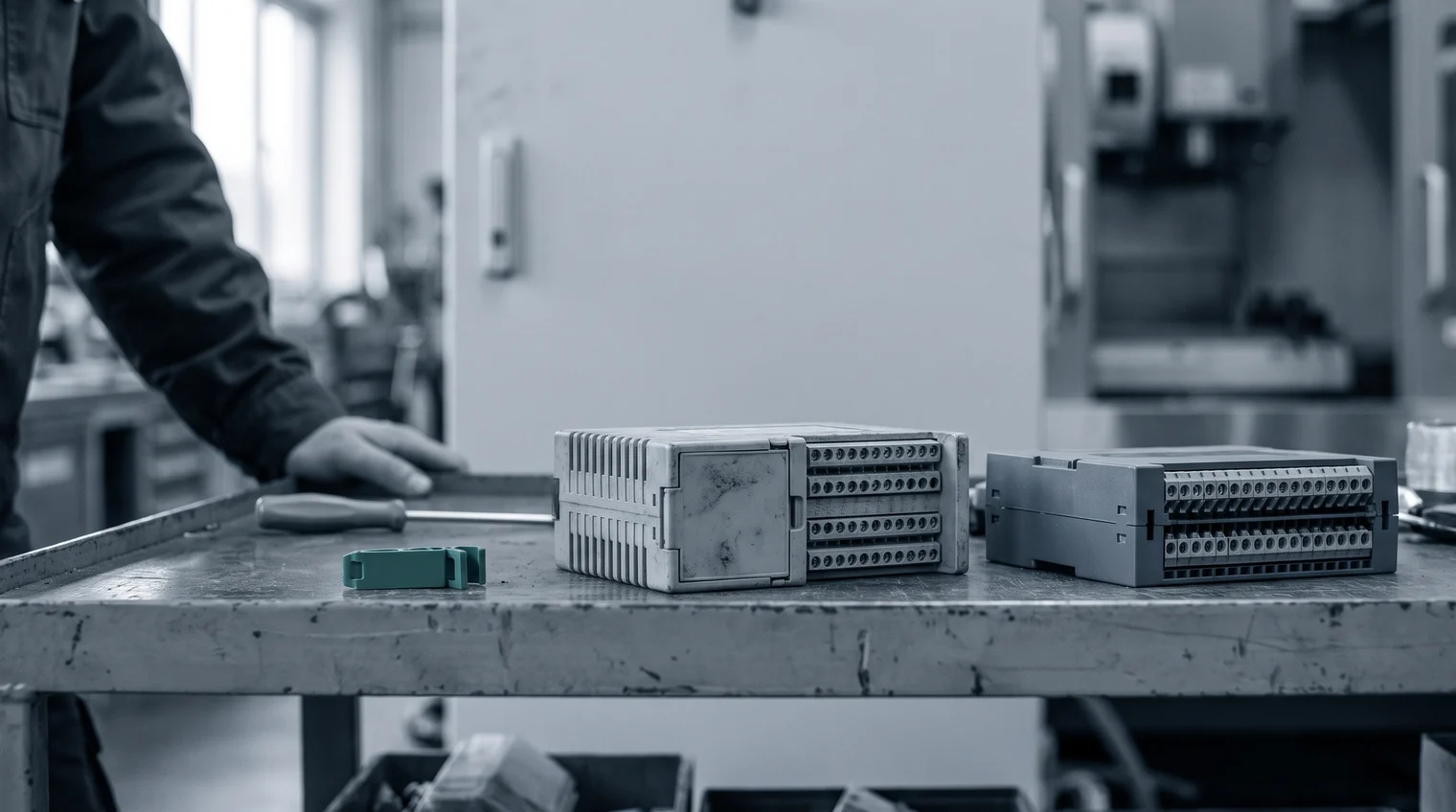
Plants, fleets and grids run for decades, and the components inside them do not. Electronics change faster than the machines they sit in, suppliers merge, and manufacturers change materials and processes. A PLC module that was easy to order when the line was commissioned can be discontinued years before the line is retired. When the plant first learns of it from a technician holding a failed module, the options have narrowed to a line stop, a rush buy at a spot-market price, or a redesign nobody planned. The notice was usually there months earlier, for maintenance and for procurement, which places the last order.
NRND, PCN and last-time buy: the signals to read
Four terms carry most of the warning. NRND, not recommended for new designs, means a part is still available but on its way to end of life: fine for the installed base, risky for anything new. A product change notice (PCN) announces that the manufacturer will change a part's material, process or specification, and the earlier you read it, the more options you have. A last-time buy (LTB) is the final window to order before the part is discontinued; once it closes, the part comes from the spot market or not at all. The fourth term is your answer to the other three: form, fit and function (FFF), the discipline that turns a substitute into an approved alternate.
One-off cleanups do not hold
Many plants answer an obsolescence scare with a cleanup: someone works through the critical parts, checks their status with the manufacturers and updates the records. The result is a better snapshot, and it starts to age the day it is finished: new parts arrive, manufacturers issue new notices, and the records drift again. What holds is a routine that runs every week, with a lifecycle check when a purchase is approved, duplicates merged among the parts you actually use, a flag when a record drifts, and a monthly review of the parts that matter most.
Run obsolescence as a program
Standards bodies have treated obsolescence this way for years. IEC 62402, the international standard for obsolescence management, sets out a process that applies throughout all phases of an item's life cycle. The US Department of Defense's SD-22 guidebook is written for implementing a proactive DMSMS management program, DMSMS standing for diminishing manufacturing sources and material shortages. A plant needs neither document to start, but it can run its own program in four steps.
Detect comes first: watch for NRND and end-of-life parts, change notices and last-time buys, starting with a watchlist of critical parts. Assess the impact on uptime and cost with a simple risk score built from the part's remaining design life, the number of manufacturers and the lead time. Mitigate by approving alternates on form, fit and function, sizing a last-time buy, adding a second source or starting a redesign. Then monitor: make lifecycle status a measure the team reports on, review the critical parts every month, and close the loop in the ERP or EAM.
Put lifecycle status where decisions are made
Lifecycle status helps where someone is about to make a decision with it. In your own ERP, EAM or field app, that means three views. On the technician's device, a part shows its status, its approved alternates with a short FFF note each, and a way to record a substitution. In the requisition and its approval, the buyer sees the status, the latest change notice and the time left before a last-time buy, with the OEM part and its alternate side by side. Whoever owns the master data sees duplicates among the active parts, records that have drifted, and the month's review list.
The first month can be small:
- Triage 200 parts, the most used and the most critical, and flag the ones that are NRND or at end of life.
- Approve one or two alternates for the top 20, each with a short FFF note.
- Flag every purchase order that goes out without a lifecycle check.
- Merge duplicates among the parts your team actually touches.
- Hold one review a month on the most critical parts, with an owner and a deadline for each action.
Measure the program by the share of purchase orders checked for lifecycle status before approval, the share of critical parts with an approved alternate on file, the duplicate rate among the most active parts, and the time from a technician's request to the fix. Note each line stop avoided in one line on the work order; over a year, those lines make the program's case.
See the status before the notice becomes a line stop
All of this depends on knowing the status of every part without asking for it. In Partium Cockpit, the Obsolescence Monitor shows which parts are active, phasing out or obsolete. For a part on its way out, it gives the date that matters, while there's time to plan. Because the search for a replacement should start before the last-time buy closes, it also names potential alternatives for parts heading for obsolescence. Your engineers decide which of them pass form, fit and function. The same catalog hides a second problem, one part under several numbers, which splits its stock and its history. De-Duplication finds the same part filed under different numbers, and stops a new record from adding one more.
Book a demo and bring the list of parts you would least like to see discontinued.
See it on your own catalog.
Book a demo, or start with a demo license.