October 15, 2026
•
Procurement
•
Philipp Descovich
Spare Parts Supplier Consolidation Starts With Who Makes the Part
Spare parts supplier consolidation decides which suppliers stay by asking who makes each part. Count the makers behind a class of parts first, and the supplier list shows where it can shrink.
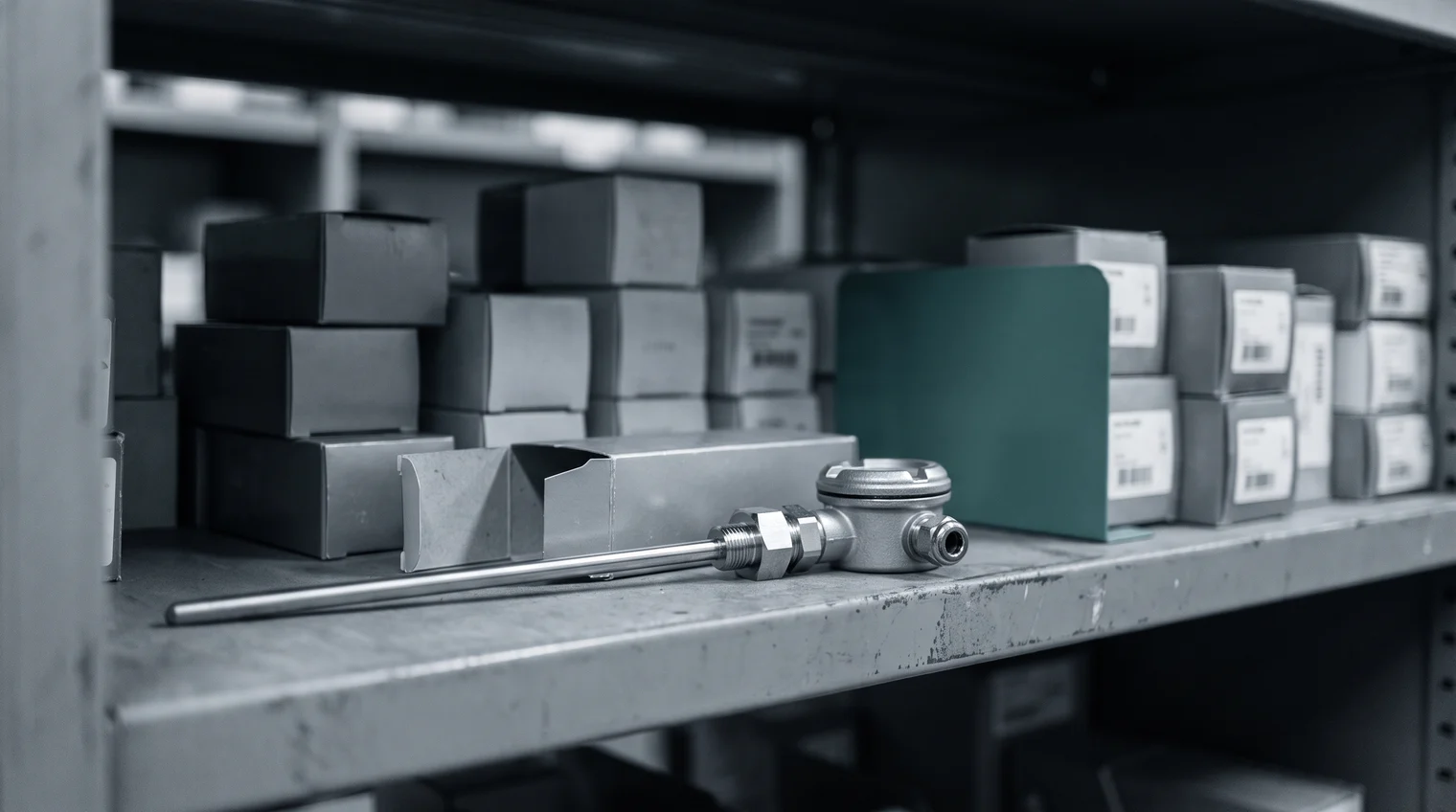
The request comes from above: fewer suppliers for spare parts this year. The category manager opens the supplier list for one class, temperature sensors, and finds eleven names on it. Some sold one sensor in three years, others ship every month. The buyer who sits next to the list knows that some of those names can go, and also knows that a sensor on the wrong line can stop a plant. What the list does not show is the one fact that decides which names can go: who makes each part.
Supplier lists grow one breakdown at a time
A supplier list for spare parts is rarely designed. It grows. When a part fails and the usual supplier cannot deliver in time, the order goes to whoever can, and that supplier stays on the list long after the breakdown is forgotten. Over a few years, one class of parts collects a dozen suppliers, each with a few orders, each with its own prices and its own part numbers. Consolidation is how procurement answers that growth, and buyers treat it as a lever to pull class by class, with no fixed number to hit.
The broader case for working the long tail of small suppliers one class at a time is made in rethinking MRO tail spend. This post takes a single class and looks at what its supplier count leaves out.
Eleven suppliers can turn out to be four makers
Take the eleven sensor suppliers apart, and the picture changes. Behind them stand four manufacturers. Three of the suppliers are dealers selling the same maker's sensor, each under its own article number, so the material master holds what looks like three different parts at three prices. Two more suppliers are distributors carrying a second maker's range. Counted by supplier, the class has eleven relationships. Counted by maker, it has four.
That second count is the one a consolidation can work with. The dealer numbers hide the maker, so the buyer cannot see that three suppliers compete to sell one product, or that the maker itself, or a distributor already on the list, could supply all three lines. Finding who else makes or sells the part is what turns a list of names into a list of options. The sensors themselves do not change, only the route by which the plant buys them.

Spare parts supplier consolidation is a list of parts
Once the makers are known, the work goes in three steps for each class. First, see how many suppliers the plant buys the class from, and how much goes to each. Second, put the maker and the manufacturer part number beside every line, including the lines bought through a dealer. Third, keep the suppliers who cover the most of the class directly, and move the rest of the lines to them. The result is a plan that names parts: these sensors move from these three dealers to the maker or to one distributor, at a price checked against what each part should cost.
A plan made this way is easier to defend than a target count. It shows each part that moves, where it goes and why, and the supplier who loses a line can be told which line and for what reason. It also shows where consolidation stops, which matters for the next section.
The order of classes matters as much as the method. Start with the class that has the most suppliers and the most dealer numbers, because that is where the gap between the two counts is widest. Electrical components, sensors and pneumatic parts are typical candidates in a plant, since the same maker's products reach the storeroom through many dealers. Spare parts supplier consolidation done class by class also leaves a trail the next buyer can follow: each class carries its makers, its chosen suppliers and the reason for each move, so the list does not quietly grow back after the next breakdown.
Critical spares stay with the suppliers maintenance trusts
Some parts in every class are critical spares: without them, a line stops. For those parts, the supplier is part of the technical decision, and maintenance has the last word. A change of supplier for a critical part is proven by the specification and the manufacturer part number, and maintenance signs it, in the same way a form, fit and function check signs off an alternate part. Where maintenance trusts one supplier for a critical sensor, that supplier stays, even if the count would say otherwise. Agreeing this rule with maintenance before the first class is consolidated is what keeps the work moving.
Partium Cockpit shows the makers behind the supplier list
Partium Cockpit starts from the supplier count and takes it down to the part, so the makers are on the screen before the negotiation begins. Too many suppliers for one class of parts means leverage with none of them. Cockpit shows where to consolidate. For the sensors, that starts with the count the category manager saw. Supplier Consolidation shows how many suppliers you buy one class of parts from. The three dealers then stop looking like three sources. It finds who else makes or sells the part, down to the OEM behind a dealer number. Before the negotiation, the buyer needs a number to take into the room, and Cockpit gives an estimate rather than a promise. It estimates what you save when you pay what each part should cost.
Pick the class with the most suppliers on your list this week, and write the maker beside each line. The gap between the two counts is where your consolidation starts. To see it for every class at once, book a demo and see it on our demo catalog, or on a sample of yours.
See it on a catalog like yours.
We show you Partium live, on our demo catalog or on a sample of yours.