July 24, 2026
•
Aftermarket & Service
•
Philipp Begala
In the Aftermarket, the Right Part Is the Customer Experience
A customer who writes in for a spare part rarely knows its number. For an OEM, aftermarket parts identification is the service: how quickly and how surely the parts desk turns that request into the right part is what the customer remembers.
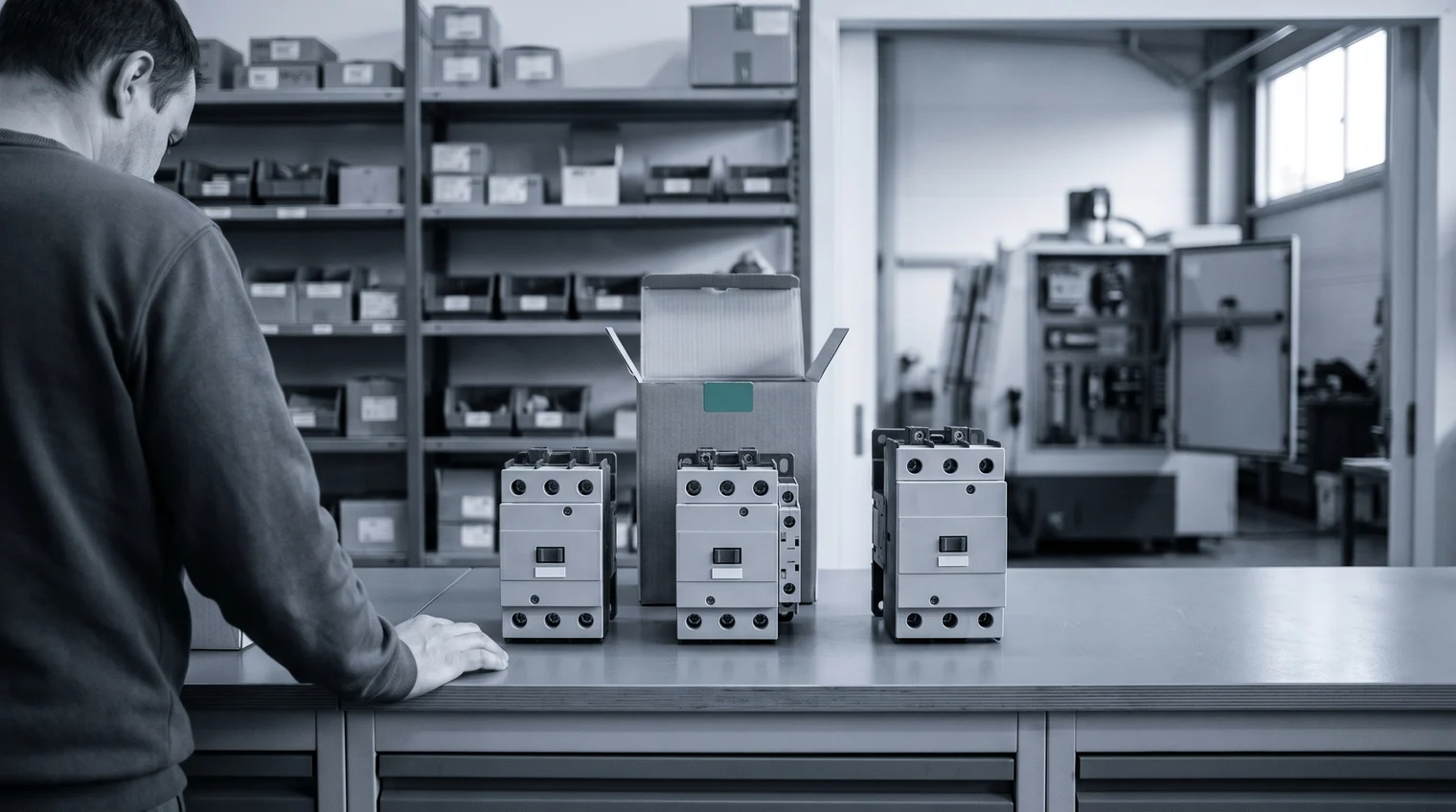
The email arrives at the parts desk a little after seven in the morning. A packaging line at a food plant has stopped, and the maintenance lead writes that "the main contactor in the cabinet burned out" and needs a replacement today. There is no part number in the message. There is the machine's serial number, a few words about what happened, and the remains of a label on the contactor with half a type code still legible. From that, the desk is expected to quote the right part, with a delivery date, before the plant's shift is over.
A parts request rarely arrives with a part number
Anyone who has run an OEM's aftermarket knows that this is the normal case. Customers describe what broke. They know their machine, and often know it better than anyone at the manufacturer, but they do not know how the manufacturer files its parts. What they actually send tends to be some mix of the following:
- a few words about the part or what it does
- the machine model or serial number
- a label or nameplate, often worn or half legible
- a position in the manual or the bill of materials
- a photo taken in a dark cabinet
None of these is wrong, and none of them is a part number. The customer has done their part of the job. Turning that request into a confident answer is the parts desk's work, and the customer judges the whole service organization by how well it is done.
Aftermarket parts identification depends on systems and people
The answer to the contactor request usually exists. The difficulty is that it exists in pieces. The catalog lists the machine model, but the control cabinet was revised a few years after launch and the catalog shows three contactor variants for it. The ERP holds an order this customer placed after the revision, under a description that never mentions contactors. The bill of materials for the serial number sits in engineering's system, and the electrical engineer who could settle the question in a minute is on a commissioning job abroad. So the desk opens the catalog, then the ERP, then the order history, and then writes an internal email and waits.
The customer sees none of this and does not care which system holds the answer. They care how long the line stands still and whether the part that arrives fits. The desk, meanwhile, is doing skilled detective work that depends on who happens to be in the office. That is why the same request is answered within minutes on one day and drags into the next on another, and why a new colleague on the desk takes months to become as fast as the people who have been there for years.

A wrong part costs far more than the part
When the desk has to guess, it sometimes guesses wrong, and a wrong part is the most expensive outcome of all. The contactor travels to the plant, the electrician opens the box, and it does not fit. Now there is a return to process, a second search for the right part, a second shipment, and a customer whose line has been down for a day longer than it needed to be. If the manufacturer's own technician made the trip to fit the part, the trip happens twice. The part itself is the cheapest item on that list.
The stakes are rising because of what customers now ask for. Deloitte reported in 2020 that manufacturers are offering more aftermarket services, and more customers are asking for service-level agreements tied to equipment uptime. Under an uptime commitment, a wrong part breaks the promise the customer is paying for.
That is also why speed alone does not help. A desk that answers at once with the wrong contactor has done more damage than one that takes longer and quotes the right one. Speed matters, and confidence matters more: the answer the customer remembers is the right part the first time.
The same holds for much of the talk about AI in service, which starts with a chatbot that answers the customer faster. For a parts desk, the hard step comes before any reply is written: working out which part the customer means. A chatbot that replies within seconds and names the wrong contactor delivers the wrong part sooner.

The search has to start from what the customer sends
For the contactor email, the desk starts from the words in the message. Type what you know: a few words, a function, part of a description. Find searches by meaning, not by exact naming. The half type code on the burned contactor is the second way in. Scan the label or nameplate, and Find returns results from the text on it.
Some customers would rather search for themselves than write to the desk, if the search understood them. Find searches your own catalog and works beside your ERP and CMMS. For OEMs, it runs as a search inside the parts portal or shop you already have. ENGEL went that way with its own portal. At ENGEL, Partium's AI-based spare part search in the ENGEL parts portal lets technicians find parts independently — with fewer part-search hotline calls, more self-served transactions in the shop, and more requests for quotes. Read the ENGEL story.
If your parts desk spends its mornings decoding requests like the contactor email, book a demo and bring a few real ones with you.
See it on your own catalog.
Book a demo, or start with a demo license.