November 17, 2026
•
Aftermarket & Service
•
Philipp Descovich
Cost-Plus Pricing for Spare Parts: Why One Markup Misprices Most of the Price Book
Cost-plus pricing for spare parts puts one markup on parts that have little in common. Sort the price book into three groups first, and price each group on what fits it: the part's value, a reference price or the market.
Most price books for spare parts began the same way. Someone took the cost of each part, added a markup, perhaps a second one for small parts, and the book has been adjusted by hand ever since. The method is easy to run and easy to defend, because every price traces back to a cost. Its weakness is that it treats every part in the book alike.
Cost-plus pricing for spare parts hides what mispricing costs
Spare parts carry a large share of the margin in an OEM's parts business. In 2025, BCG put gross margins on spare parts and consumables at about half of sales. At that level, pricing is one of the strongest levers the aftermarket has, and it works in both directions. A price set too low on a part only you make gives away margin the customer would have paid. A price set too high on a part the customer can buy elsewhere sends the order to someone else, and price is one of the reasons customers buy service parts elsewhere.
Neither error shows up as a loss. The margin you never charged and the order that went to a distributor leave no line in a report, so a few points of mispricing across the whole price book can stay hidden for years. Finding it starts with seeing that the book holds different kinds of part. Before you read on, pull the twenty parts that sell most: you will need them at the end.
Three lines that one markup gets wrong
Take three lines from one price book. The numbers are round and made up, as an example. Each part costs you a different amount, and the book adds the same 40% markup to all three.
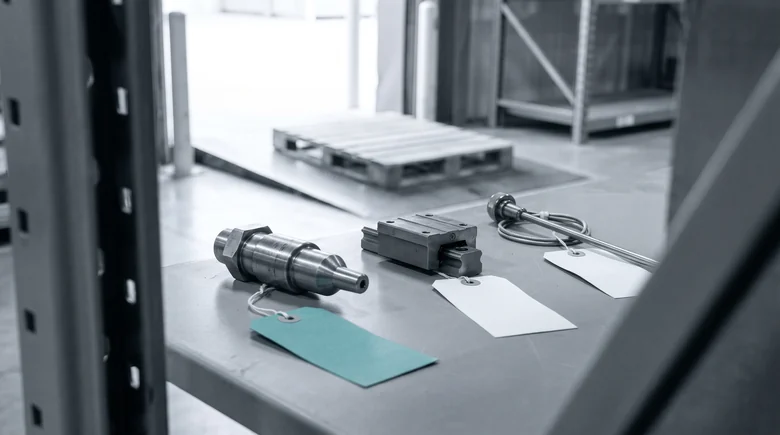
A machined nozzle for one of your own machines costs you $200 to make, and cost-plus prices it at $280. Nobody else makes it, so no market price exists. The customer is left with a machine standing still or a drawing sent to a job shop. For a part that keeps a line running, $280 is well below what it is worth to the customer, and a price based on that value could be $450.
A linear guide carriage you buy in from the guide's maker costs you $150, and cost-plus prices it at $210. The customer can read the maker's number off the carriage and buy the same part from the maker's distributor, for $180 in this example. Here the markup prices the part above what the customer will pay, and the order goes elsewhere.
A standard type K thermocouple costs you $20 and is priced at $28. The same thermocouple sells on catalogue sites for about $24. The market sets this price outright, and a price above it loses the order, and some of the customer's trust in the rest of the book.

One method, three outcomes: one price too low, two too high. On average across the book, the markup can look about right, because the errors run in both directions and partly cancel in the total. Line by line, it is wrong on most of them. Look for the same three kinds of line in your own book before you change a single price.
Sort the price book into three groups
The three lines point to the sort. Before you choose a method, put each part in the book into one of three groups, by whether the customer can buy it anywhere else:
- OEM-only parts, made to your drawing and sold by nobody else. Base the price on the part's value to the customer and on how critical it is to the machine. This needs each part's criticality and a sense of what a stopped machine costs the customer.
- Parts available elsewhere under another number, bought in from a maker who also sells them through distributors. Base the price on a reference market price, the maker's or its distributors' price for the same part. This needs the maker's number for each part and a current reference price.
- Catalogue standards, sold on catalogue sites under a standard designation. The market sets the price. This needs the current catalogue price and a rule for how close to it you sell.
Within each group, sort a second time by how critical the part is to the customer's machine. A critical OEM-only part carries the most value. A critical part in the second group can carry a margin above the reference price, because the customer pays for getting the right part quickly from the machine's maker. In every group, your cost stays the floor that no price goes below.
The second group takes the most work. The link between your article number and the maker's number is often missing from the parts master, because the part was bought in under the maker's number and renamed when it entered your catalogue. Rebuilding that link is the first task, and it also shows you which of your parts a customer can buy somewhere else.
Test the sort on twenty lines before you touch the whole book. Take the twenty best-selling parts you pulled earlier, put each into one of the three groups, and compare its price today with what its group's method would give. If the OEM-only lines sit below their value and the catalogue lines sit above the market, the book is mispricing in both directions, and you know where to start. Where prices rise as a result, how you announce them to customers matters as much as the new numbers.
See it on a catalog like yours.
We show you Partium live, on our demo catalog or on a sample of yours.