November 24, 2026
•
Aftermarket & Service
•
Philipp Descovich
How to Announce a Spare Parts Price Increase Without Losing Customers
A spare parts price increase is won or lost in the week the letter goes out. Decide which lines move and why, tell key accounts and the parts desk first, and send a letter that says plainly what changed.
Costs went up, and the price book has to follow. Materials and freight moved first, and in 2026 tariffs joined them: in August, Antone Gonsalves reported for Supply Chain Dive that Deere expects a "step-up" in tariff costs in 2027. Buyers feel the same pressure from their side, as the buyer's side of the same tariff shows. For an OEM, the question is how to raise parts prices and keep the customers who pay them. Most of the answer lies in what happens around the letter, and it involves the parts desk as much as the price book.
Decide what moves before you write
A letter can only be as clear as the decision behind it. Before anyone drafts a sentence, settle which lines move, by how much, and why each group moves. A price book holds different kinds of part, and they do not move alike. Parts only you make follow your costs and their value to the customer. Parts the customer can buy elsewhere under the maker's number follow that maker's price. Catalogue standards follow the market, and some of them may not move at all. The three groups of a price book set out how to sort them.
The reason has to fit in one sentence, and it has to be true for the lines it covers. "Material and freight costs for machined parts rose in 2026" is a reason. "Market conditions" is a phrase a customer reads as no reason at all. Check your contracts for notice periods and price clauses at this stage too; whoever owns the contracts sets the earliest date, and the letter follows it.
Then think about the customers who will call the parts desk the morning the letter lands. Every one of them will ask some version of the same few questions. Write those questions down now, while the decision is fresh, and write the answers next to them.
Who hears about the spare parts price increase first
The order of telling decides how a spare parts price increase is received. The people who learn about it from a letter they did not expect are the ones who call to complain, or quietly start buying elsewhere.
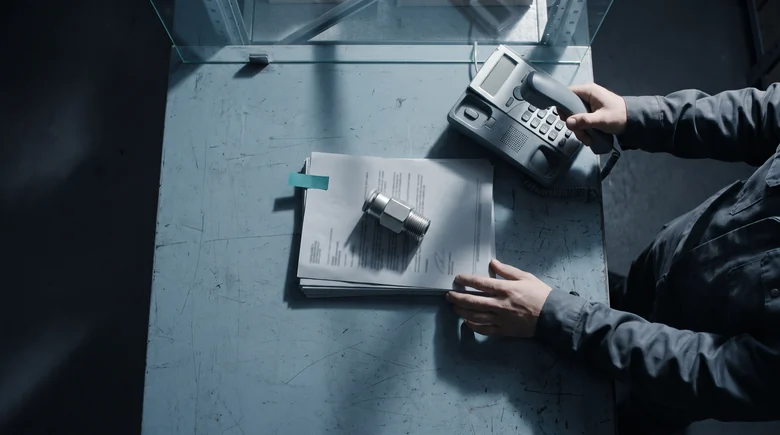
Brief the parts desk first, a few days before anything goes out. The desk takes the calls, and a desk that hears about the increase from a customer loses that customer's trust in a single call. Give them the reason, the date, the affected lines and the answers to the three questions they will hear most:
- "Why is this going up?" The one-sentence reason from the letter, and the group the part belongs to.
- "Does this apply to my open order?" What happens to orders placed before the date, as your terms set it.
- "Can I still order at the old price?" Whether there is a window before the date, and until when.
Next, call the key accounts and the dealers. A phone call from their account manager a week before the letter tells them they matter, and it gives them time to plan their own budgets. Then send the letter to everyone else. Change the prices in the portal on the date the letter names, and not a day earlier. A customer who sees a new price in the portal before the letter arrives has found an increase you seemed to hide.
The letter, line by line
A good price letter is short and has six parts, each one sentence or two. The example below uses made-up numbers.
What changed. "From 1 March 2027, prices for 410 of the 3,200 spare parts in our price book will rise." Say the number of lines and the date in the first sentence. Customers read that far, and some read no further.
Why. "Material and freight costs for machined and cast parts rose through 2026." One sentence, true for the lines it covers.
From when. The date again, and what happens to orders placed before it. Repeat it, because it is the line customers come back to.
Which parts. A list or a link to one, with each affected part's number, its old price and its new price. A pneumatic fitting that goes from $14.20 to $15.10 should be findable by its number in seconds.
What stays the same. The parts that do not move, delivery times, service terms. Customers notice an increase more than they notice what held, so say what held.
Who to call. A named contact or the parts desk's direct line, with hours. A letter that ends on a general address tells the customer that nobody wants the call.

Say it plainly. An increase hidden in a new surcharge line or in small print on the invoice reaches the customer anyway, later and as a surprise, and costs more trust than the increase itself.
After the letter, listen to the desk
The weeks after the letter tell you whether the decision was right. Ask the parts desk to log every call about the increase: the customer, the part, the question and what the customer did next. A pattern shows up within a few weeks. Calls that cluster on one group of parts often mean that group moved too far, or that its reason did not convince.
Review the moved lines after three months. Compare orders for each group with the same months a year earlier, and look hardest at the parts customers can buy elsewhere, because those are the orders that leave without a call. A line whose orders dropped while the rest held is a line to look at again.
Before your next letter goes out, start with the briefing. List the three questions your best customer will ask, and write the desk's answers before you write the letter.
See it on a catalog like yours.
We show you Partium live, on our demo catalog or on a sample of yours.