October 9, 2026
•
Procurement
•
Philipp Begala
Search Before You Buy: Why MRO Buyers Reorder Parts They Already Have
Most plants tell buyers to search before they buy. An MRO material search that comes back empty does not stop a purchase. It starts one, and the part is often already on a shelf at another plant, under another name.
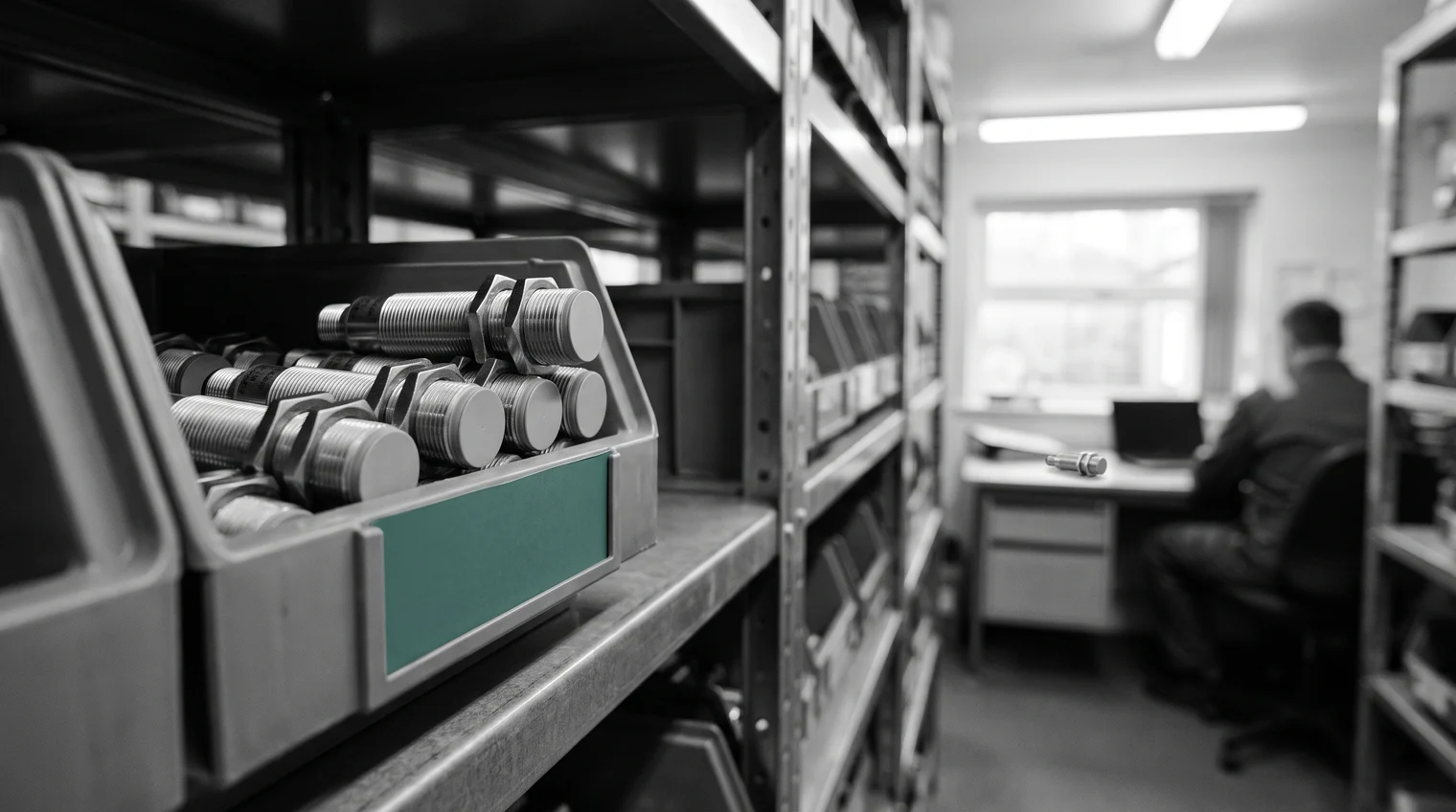
The request reaches the MRO buyer at the plant in Ohio on a Monday morning: "inductive sensor M18 PNP, need 4, line 3 down to one spare." The buyer does what the purchasing policy asks. They search the material master for "inductive sensor M18", get nothing that matches, and place the order with the usual distributor. Two weeks later the storeroom manager at the German plant mentions, in a call about something else, that they hold eleven of that sensor and have not drawn one in two years.
Nobody did anything wrong. The buyer searched, the search found nothing, and an order was the reasonable next step. The trouble sits in the search.
An empty search ends in a purchase
When the search comes back empty, the request does not wait. The line is down to its last spare, maintenance needs the part, and the buyer has two choices: keep searching on a hunch, or order. Under time pressure, ordering wins every time, and it should.
So the cost of a missed search is rarely the time spent searching. It is the purchase that follows. The plant pays for a part it already owns, the capital tied up in the German shelf stays tied up, and the distributor's price applies, whatever the contract says. Often a second cost follows the first. If the part has no record at the Ohio plant, someone creates one, with a new article number and a new description. The next buyer who searches now has one more record to miss.
That is why "search before you buy" so often fails as a rule. It asks people to do something the search cannot support. If you want to know how often it happens in your plants, look for parts that were ordered at one site while stock of the same part sat untouched at another. The list is usually longer than anyone expects.
The part is there, written three ways
Here is the sensor as it sits in three plants' material masters. In Germany it is article 40017732, "NAEHERUNGSSCHALTER M18 PNP SCHLIESSER", with no manufacturer part number. In Ohio it is article 7100-2284, "PROX SW IND 18MM 3W PNP NO", also with no manufacturer part number. In Texas it is article 300118, "SENSOR, INDUCTIVE, M18X1, 8MM, PNP", and this one carries the manufacturer part number.
All three are the same sensor from the same maker. Each description was written by someone careful, in the language and the abbreviations of their plant. The German record says Näherungsschalter, the word a German electrician uses. The Ohio record abbreviates everything to fit the short text field. The Texas record has the maker's number, because someone once copied it from the label.

Now search for the words in the request: "inductive sensor M18". The German record contains none of those words. The Ohio record says "PROX SW IND", which no search on "inductive" will match. The Texas record has both words, in the opposite order and separated by a comma, so whether it shows up depends on how your ERP's search is set up. The best realistic outcome is one hit out of three, and the eleven sensors in Germany are not part of it.
You can try this on your own catalog in ten minutes. Pick a part you know is stocked at more than one plant, write it the way a requester would, and see which records come back.
MRO material search fails on words, not on stock

The pattern in the sensor example is not a quirk of one company. A 2026 study from SUPSI in Lugano on spare parts across sites names it directly: the main obstacle "is not a lack of parts but a lack of actionable visibility" (Bulloni et al., SUPSI, 2026, on arXiv). The records contain duplicates and partial references, so the right part often exists somewhere and still cannot be found. In the same study, a keyword search over descriptions and specifications put the correct part first in about three of four cases. Better retrieval methods raised that, and still missed roughly one part in five.
Read the other way, those numbers are the buyer's experience. A search that misses one part in four is a search that sends one request in four to a supplier, for a part that may already be on a shelf. The misses are not random, either. They cluster on exactly the parts the sensor example shows: parts stocked at several plants, described in several languages, created by different people over many years.
The same records show up in the inventory figures. In one measured case at a multi-site manufacturer, duplicate items made up about 9% of inventory (a case study published by Reliable Plant). That is one case, not a benchmark, and your share will differ. The mechanism is the same everywhere, though: every missed search that ends in a new record adds one more duplicate for the next search to miss.
Why keyword search breaks on real records, and how to test your own, is the subject of why keyword search misses spare parts in the material master.
What the search has to do before anyone buys
If the cause sits in the search, the fix belongs there too. Training buyers to search harder does not help when the words in the request never appear in the record. For "search before you buy" to work in a plant network, the search has to do four things:
- Find the part from the words in the request, however the record was written.
- Search every plant's records at once, not the buyer's own plant.
- Show the stock with each hit, so a match becomes a transfer instead of an order.
- Check a new material request against the whole master before a record is created.
The last point matters more than it looks. A purchase for a part you already own costs money once. A new record for a part you already own costs you on every search after it. When a request does end in an order, that order should at least not make the master worse. Off-contract orders often start the same way, which is the subject of maverick buying in MRO.
Search every plant before the order goes out
Back in Ohio, the buyer has the same request and a different search. Partium Cockpit is software for the teams who look after spare parts: maintenance and procurement. The dashboard shows what needs doing today, and the feature where you do it. The buyer types the request as it came in. Material Search finds the part from the words you have, even when the record is messy.
That puts the German and Texas records on the same screen as Ohio's own. One search shows where the part is stocked, at every plant, so you find it before you buy it again. The eleven sensors in Germany are now the first answer, and the call to the distributor can wait for the parts nobody holds.
If the part truly is new to every plant, the record that follows starts clean. Material Creation checks every request against your master, so a part you already have isn't created twice.
None of this replaces the buyer's judgement about whether a transfer beats a purchase on a given day. It makes sure the buyer is choosing between real options. Book a demo, or ask for the demo license and run the search on your own catalog. For how the same part's context feeds the next sourcing decision, read spare parts data for sourcing decisions.
See it on your own catalog.
Book a demo, or start with a demo license.