
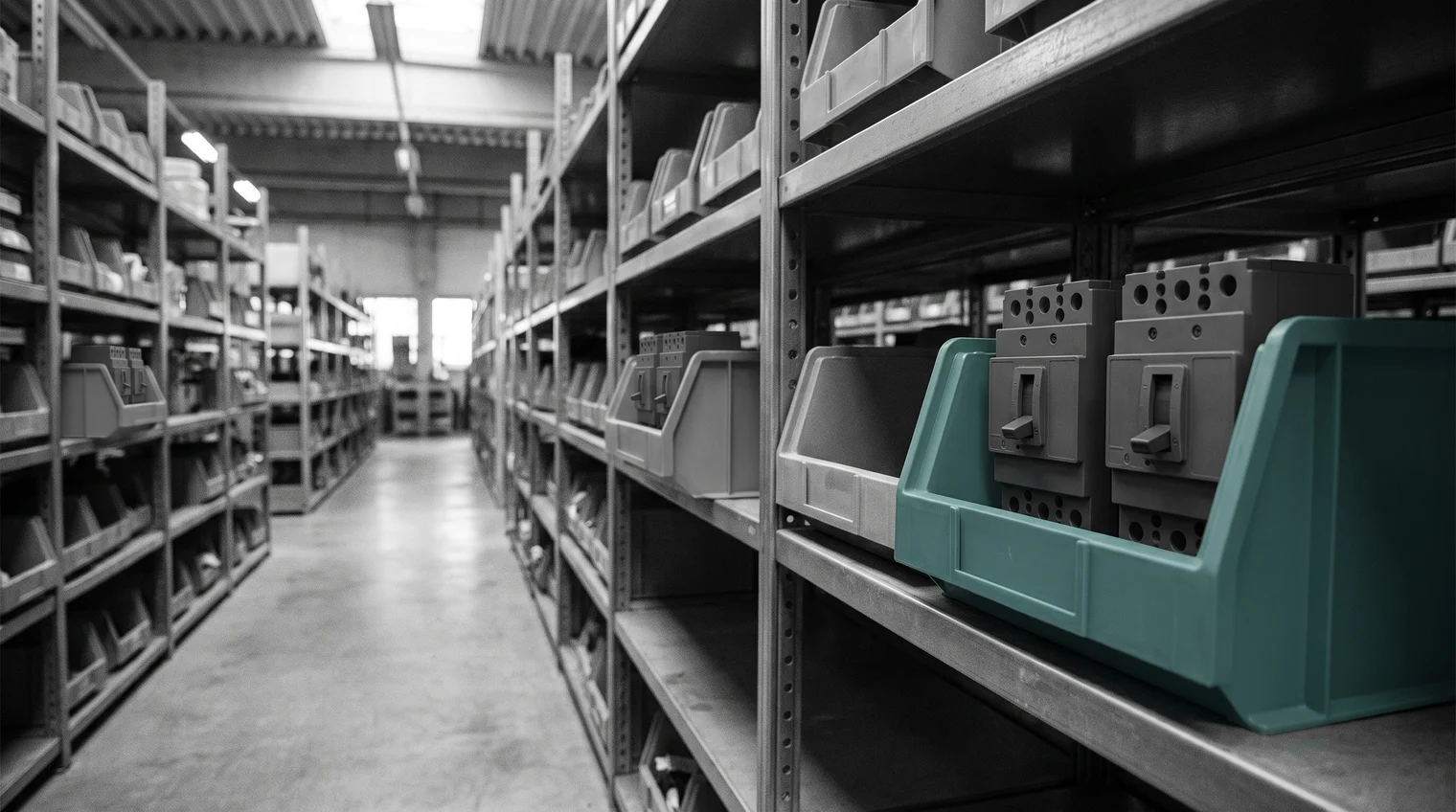
Ask a storeroom manager what poor master data costs, and the answer is usually a story rather than a number: the motor bought twice because the first one sat on a shelf under another name, or the repair that waited half a shift for a part that was in stock all along. The cost is real, but it is spread across maintenance, the storeroom and procurement, so nobody books it. Naming where it shows up is the first step to getting it fixed. It also gives the master data manager something concrete to take to the head of procurement, who pays for the duplicates.
The cost of poor spare parts master data starts with duplicates
Without a naming convention or a unique identifier, the same part enters the ERP as several items: one record from the original commissioning, one created by a buyer who could not find it, one typed by a planner who abbreviated differently. Technicians cannot see that the part is already in stock, so work waits or someone orders it again, and the duplicate purchases tie up capital and raise holding costs. The same duplicate part records cause the second cost: shelves full of parts nobody needs beside a critical spare that is missing. Wrong usage data, no criticality and inaccurate stock levels mean the plant reorders what it has and misses what it lacks. One missing part can stop a production line, and the emergency order that follows carries a premium on top of the carrying cost of everything else.
Bad records slow the repair and the purchase
Technicians depend on complete, correct part data to keep machines running, and the third cost appears when it fails them. A missing specification or a wrong storage location turns into time spent searching, every minute of it adds to the mean time to repair, and unplanned downtime is output the plant does not get back. Procurement pays the fourth cost. Incomplete records slow sourcing, cause order errors and delay deliveries, so buyers spend their time checking orders and re-sourcing parts that were missed. Emergency buys and duplicate orders then raise total procurement spend without anyone having decided to spend more, and every repair becomes a reaction, which is the subject of why reactive maintenance often starts with spare parts.
Wasted labor and compliance risk are the costs nobody books
The fifth cost is labor. Maintenance crews lose time identifying parts by hand, reconciling records and cross-checking the ERP, so skilled people spend wrench time on detective work. The sixth is the most serious. Outdated or wrong data can put an incorrect or uncertified part into a machine, which is a safety issue and a regulatory one: a non-compliant part raises the risk of equipment failure, and the fines, recalls and injury claims that can follow come from errors that could have been avoided. Taken together, the six costs make the case for master data quality: spare parts master data is an asset, and it deserves to be managed as one.
Fix the record where it is created
A one-time cleanup leaves the next duplicate free to arrive, so the fix has to sit where records are created and used. Partium Cockpit is built for that work. De-Duplication finds the same part filed under different numbers, and stops a new record from adding one more. The motor that was bought twice becomes one record. One search shows where the part is stocked, at every plant, so you find it before you buy it again. Where a new record arrives thin, Cockpit proposes the missing attributes for each part your team adds. The decisions stay with your people: the part only goes into the catalog when your team creates it.
If you know the duplicates in your own storeroom, book a demo and bring a few of them.
See it on your own catalog.
Book a demo, or start with a demo license.
More from Partium...
July 23, 2026