October 15, 2026
•
Aftermarket & Service
•
Philipp Begala
First-Time Fix Rate: Get the Right Spare Part on the Van Before It Leaves
A service visit that ends with "I'll come back with the part" costs twice. Much of the first-time fix rate is decided before the van leaves, by whether anyone identified the part.
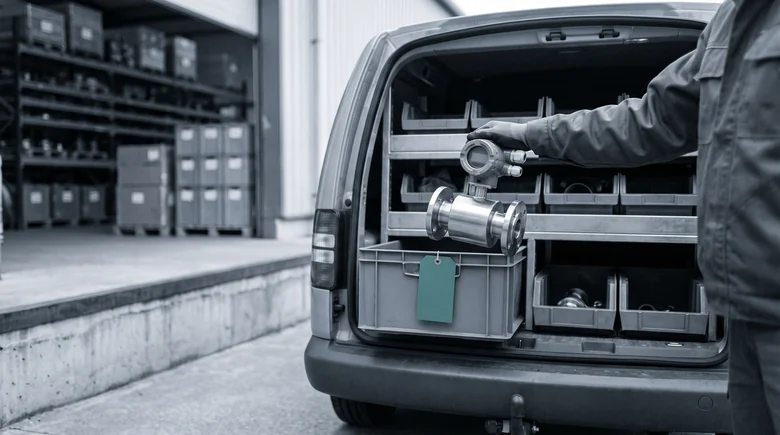
The call comes in on a Wednesday afternoon. A dairy's filling machine is dosing wrong on one lane, and the customer's maintenance lead says the dosing unit is the problem. The service desk books an engineer for the next morning. Nobody asks which part is likely to be at fault, so the engineer loads what the van usually carries and drives two hours. On site, the diagnosis takes forty minutes: the electromagnetic flow meter on lane 3 has failed. The van carries a flow meter, for the machine's first revision. This machine was built in the second, with a different flange. The engineer orders the part and books a second visit.
Every head of service knows that visit. It costs a day, it costs the customer another morning of downtime, and the part that decided it was never identified before the van left.
What a failed first visit costs
Aquant's 2026 Field Service Benchmark puts the industry's first-time fix rate at 77%, with top performers at 88% and the bottom at 60%. The same benchmark finds that failed visits account for about a quarter of total service cost at the median, and for 44% among the bottom performers. For a field service team at the benchmark, nearly one visit in four ends without the fix.
A second visit repeats the travel and the engineer's time, and it adds a day the customer's machine stands still or runs short. The customer remembers that day when they decide whom to call next time. The first-time fix rate is one of the numbers a head of service is measured on for that reason: it is where cost and the customer's patience meet.
How much of the first-time fix rate is the spare part
A first visit fails for many reasons. The engineer lacks a skill for that machine, the diagnosis on the phone was wrong, or the slot was too short. Those causes are real, and they belong to training and scheduling. The part is the cause this post is about, and it is a large one. In a 2023 Service Council survey, one in five service organisations said that more than 30% of their failed visits were due to unavailable parts. In the Service Council's 2021 Voice of the Field Service Engineer, only half of the engineers agreed that their company makes it easy to know which parts they will need, and a third disagreed.
"Unavailable" covers two cases. In the first, the part is not in stock anywhere and has to be ordered. In the second, the part is in stock, at the warehouse or even in another van, and it was not on this van because nobody knew which one to take. The second case is decided at dispatch.
To see your own split, take last quarter's repeat visits and sort each one into three groups: not a parts problem; the part was not available anywhere; the part was available, and the van carried the wrong one or none. The third group is what identifying the part before dispatch can fix, and it is usually larger than the second.
Where the part goes wrong before dispatch
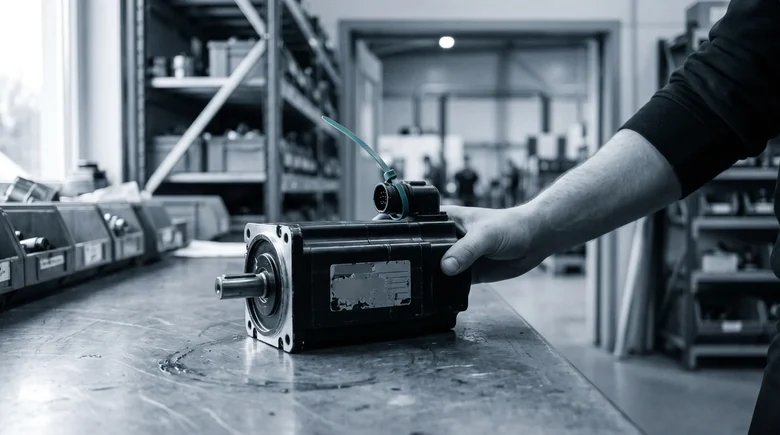
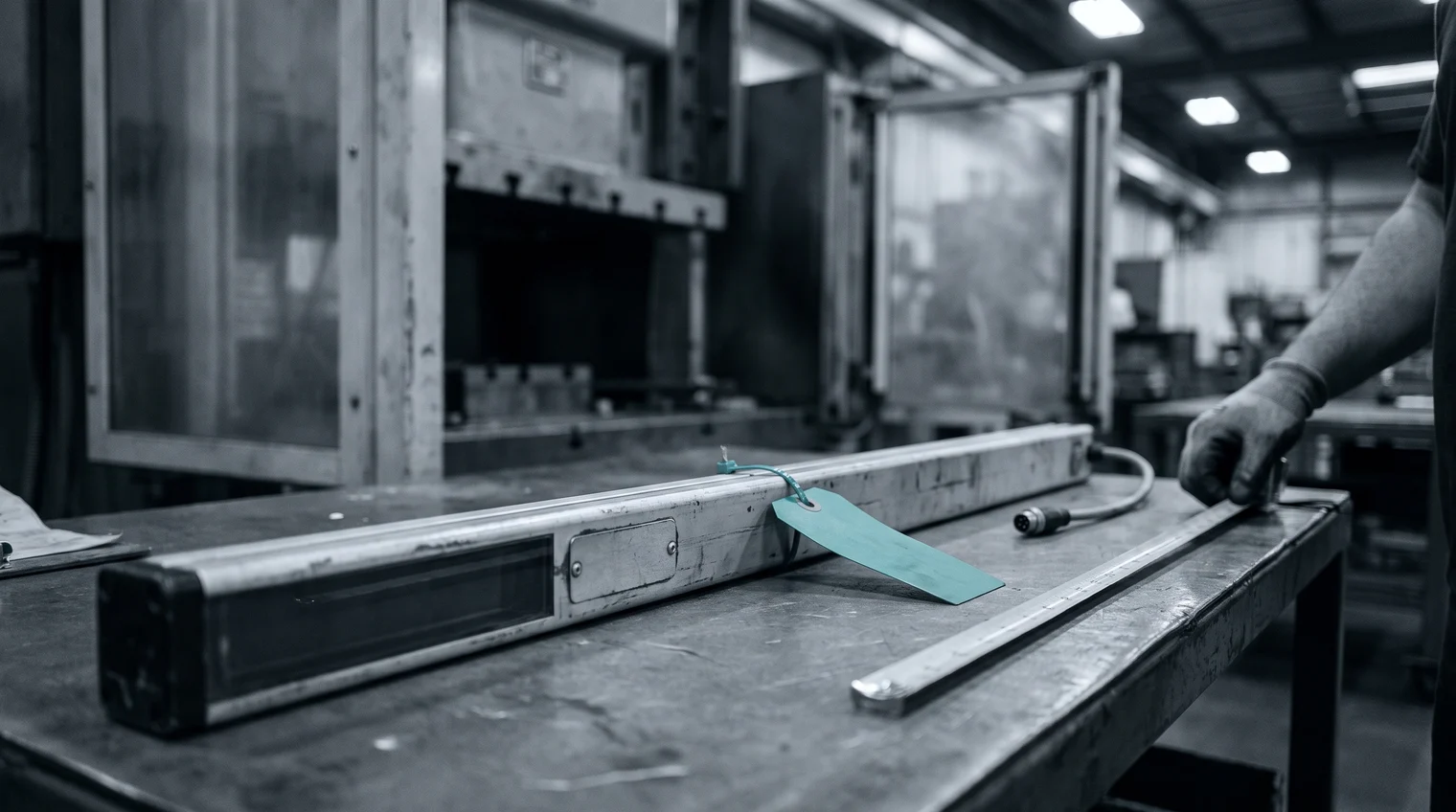
Go back to the flow meter. The call described a symptom on a unit, not a part, and the dispatch was booked by machine and symptom. Everything needed to identify the part was already at the machine. The machine number would have told the desk which revision it was. The flow meter's label was half worn, but it still showed part of the type code. The customer could have named the position in the parts list, and a photo of the meter in place would have shown the flange.

None of that needs an engineer. It needs a desk that asks for the right things when the call comes in, and a way to turn them into a part number before the van is loaded.
A pre-dispatch check for the part
Four things, asked for on every call that will lead to a visit:
- The machine number. It tells the desk which revision the part sits in, and that is often what separates two variants.
- What is left of the label. A partial type code or a rating, typed by the customer as far as they can read it.
- The position in the parts list. The assembly or item number from the manual or the machine's documentation.
- A photo of the part in place. It shows connections, flanges and mounting that a description leaves out.
With those four, the desk identifies the most likely part, confirms it against the machine's parts list, and puts it on the van. When the diagnosis is uncertain, the van takes the two most likely parts instead of the usual stock. The four are the same intake a parts desk asks for before a quote, as described in from spare parts inquiry to quote.
The check works when someone at the desk can turn those inputs into a part number quickly, in the OEM's own catalogue. Partium Find does that work. Partium Find identifies the spare part from whatever you have at the machine: a photo, a label, a code, a few words or the bill of materials. The flow meter's worn label is the first clue. Scan the label or nameplate, and Find returns results from the text on it. The machine number points to the second revision, and that revision's parts list still holds two meters. Use the bill of materials to narrow down a part that is hard to name. The customer's photo settles the flange. Take a photo of the part. Find matches it even when the part is worn, dirty or obfuscated.
The engineer still diagnoses the machine. The part is no longer the reason to come back. Pull last quarter's repeat visits, mark the ones where the van carried the wrong part or none, then book a demo, or ask for the demo license and run it on those cases.
See it on your own catalog.
Book a demo, or start with a demo license.