
July 27, 2026
•
Procurement
•
Philipp Begala
AI Needs Power. Power Needs Parts.
The debate about AI is about compute and electricity. Underneath it are transformers, switchgear, cables and the transformer spare parts that someone has to identify and source before the work can move.
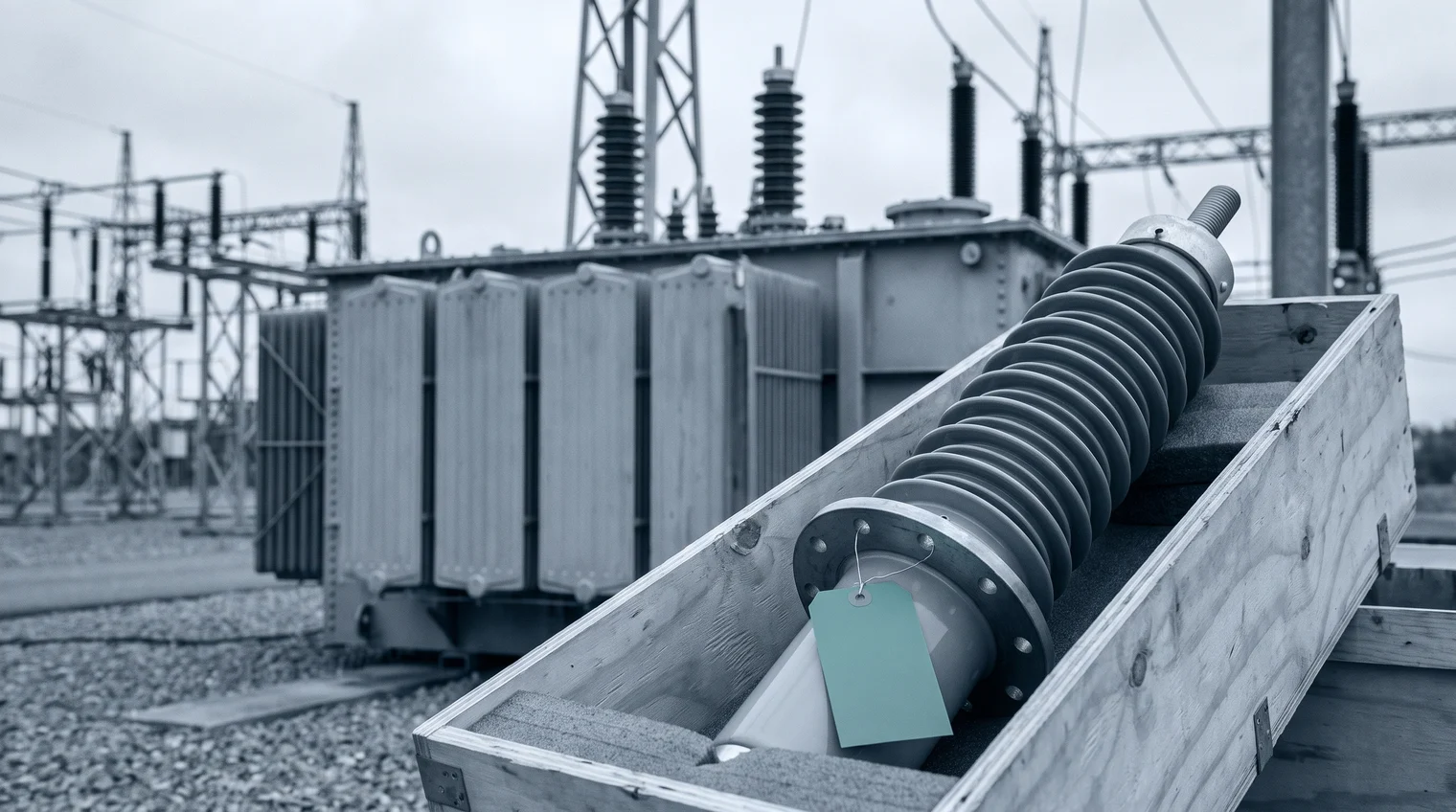
Most of what is written about AI and energy is about demand: how much electricity new data centers will draw, whether generation can keep up, what it means for prices and emissions. Those are fair questions, and they are argued at the level of gigawatts and national plans. The work that turns a plan into a connected data center happens at a much smaller scale. It happens in a substation yard where a transformer is waiting for a replacement bushing, in a storeroom where nobody is sure which of three surge arresters on the shelf fits the new bay, and on the desk of a buyer who was quoted a lead time this morning that is measured in seasons.
AI's demand runs on physical parts
Every new connection to the grid is a chain of physical equipment: power transformers and distribution transformers, switchgear, cables, protection relays, and the spare parts that keep all of them in service. None of it appears because a data center needs it. It has to be specified, sourced, delivered, installed and maintained, and when one part in that chain is hard to identify or hard to get, the delay travels upward into the project timeline and the outage plan.
For the buyer and the maintenance head at a utility, a grid contractor or a plant with its own substations, this is not news. What the headlines count and what the work needs are two different lists. The headlines count AI demand, data centers and grid capacity. The work needs the right transformer, its exact specification, the stock on hand, a second source and an honest lead time.

The grid is the bottleneck
The International Energy Agency is direct about where the constraint sits. In its Electricity 2026 report, it describes grids as emerging as a bottleneck, with more than 2,500 GW of renewable, large-load and storage projects stalled in grid connection queues. To meet expected demand, the IEA says annual grid investment has to rise by about 50% by 2030, from today's USD 400 billion.
That is a story about money and policy. It is also a story about thousands of individual parts decisions, because every one of those stalled projects eventually needs equipment that someone has to order, receive and fit. The distribution transformer shortage is the clearest case. The US Department of Energy names the same pressure for one of the most common pieces of that equipment: distribution transformers face supply-chain constraints, long lead times and component shortages.
Transformer spare parts are a complexity problem as well as a shortage
The figure that changes the picture comes from the same department. At an industry workshop in March 2023, DOE heard that there are over 80,000 different distribution transformer varieties nationwide, and that production takes long partly because specifications differ from one utility to the next. That number stopped me when I first read it. A shortage with 80,000 variants behind it is a shortage and a complexity problem at the same time.
Complexity is where the time goes. Before a team can order, it has to pin down four things for each of its grid spare parts:
- the specification that actually applies to this installation
- the identifier, including the manufacturer's own part number
- the stock on hand, at this site and at the others
- the other sources that could supply it
Each of those depends on a record that was often written years ago by someone who has since left, under a description that does not match today's naming. The same arrester may sit in the system twice. The manufacturer number may be missing, so nobody can tell whether a second maker builds the same part. That is the point where the search for another source either starts from a solid record or stalls, and it is the subject of why the OEM is often the only source you can see.
What software can and cannot do
Software creates no supply where none exists. It does not shorten a transformer factory's order book, and it does not replace the engineering judgment and the standards a utility applies before anything is energized. A part that looks similar to the one in the record is a potential alternative for engineers to review, never a safe replacement by default.
What software can do is shrink the complexity around the shortage. It can identify a part from the record or nameplate the team already has, find the same part filed twice, show who else makes it and what it should cost, and flag parts that are heading out of production while there is still time to plan. That is less dramatic than a new factory, and it is the part of the problem a team can act on this quarter.
Pin down one grid part at a time
The bushing in the substation yard starts with its nameplate. Scan the label or nameplate, and Find returns results from the text on it. The record behind that nameplate is often the thin one written years ago, and that is where the next step happens. When a part's record is incomplete, you complete it in Partium Cockpit: Partium Agent proposes what is missing, and your team decides.
With a complete record, the buyer can look past the one maker on file. Supplier Discovery finds who else makes or sells the part, down to the OEM behind a dealer number. For equipment that is going out of production, timing matters more than anything else. Substitutions & OEM Insight flags the parts heading for obsolescence and names potential alternatives while there is still time to plan. Every potential alternative still goes to the engineers who decide what is energized.
If your team is waiting on a grid part it cannot pin down, book a demo and bring that part's record with you.
See it on your own catalog.
Book a demo, or start with a demo license.
More from Partium...
July 23, 2026