July 27, 2026
•
Parts Intelligence
AI Needs Power. Power Needs Parts.
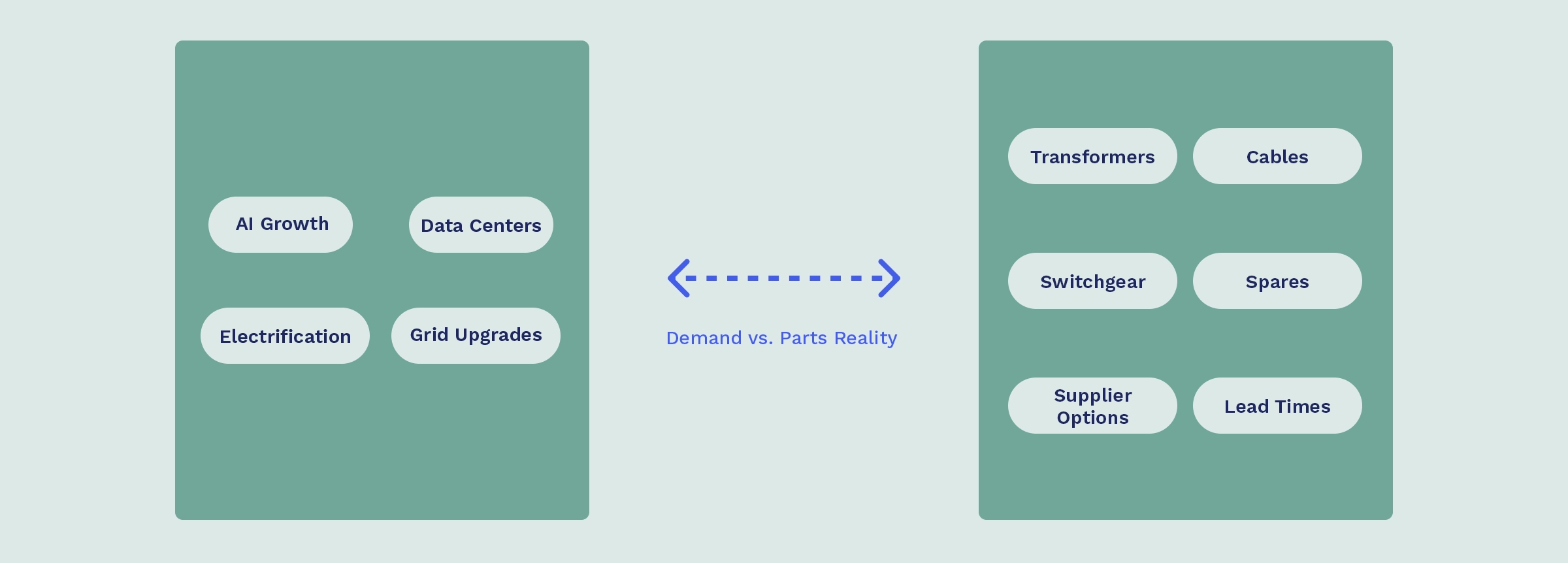
The AI conversation is often about compute, energy demand, and grid capacity. But behind all of that are very physical parts - transformers, cables, switchgear, spares, and the teams trying to identify and source them before the work stalls.
Partium helps industrial teams identify the right part, complete missing sourcing context, and reduce the manual search that slows critical work down.
AI needs power.
That sounds obvious, but it matters.
Because behind the big AI headlines are very physical things.
Transformers.
Cables.
Switchgear.
Substations.
Replacement equipment.
Spare parts.
Supplier options.
People trying to identify what is needed before the work stalls.
That part of the conversation does not always get as much attention.
It should.
We talk a lot about AI models, data centers, compute capacity, and electricity demand.
But power does not appear because someone needs it.
It has to be generated, transmitted, connected, maintained, repaired, upgraded, and supported by a huge network of equipment and parts.
And when those parts are hard to identify, hard to source, or hard to trust, the problem does not stay in procurement.
It shows up in project timelines, maintenance planning, outage response, grid reliability, and the pace of infrastructure work.
That is the part people miss.
The AI conversation is not only about energy demand
A lot of the current conversation around AI and energy is focused on demand.
How much electricity will AI data centers need?
Can the grid keep up?
Where will new generation come from?
How fast can new capacity be added?
What happens to reliability, cost, and emissions?
Those are all important questions.
But here is the thing: demand is only one side of the story.
The other side is the physical supply chain needed to support that demand.
A data center may need power quickly.
A grid upgrade may need new equipment.
A substation project may need specific components.
A utility may need a replacement part before a repair can move forward.
A maintenance team may need to confirm whether the part in the system is actually the right one.
That is where the conversation becomes more practical.
Not just "Can we produce enough energy?"
But also:
Can we identify the right equipment?
Can we source the right part?
Can we compare supplier options?
Can we understand availability?
Can we work through long lead times?
Can we reduce manual searching when critical infrastructure is waiting?
That is not the flashy part of the AI story.
But it is very real.
The grid is becoming the bottleneck
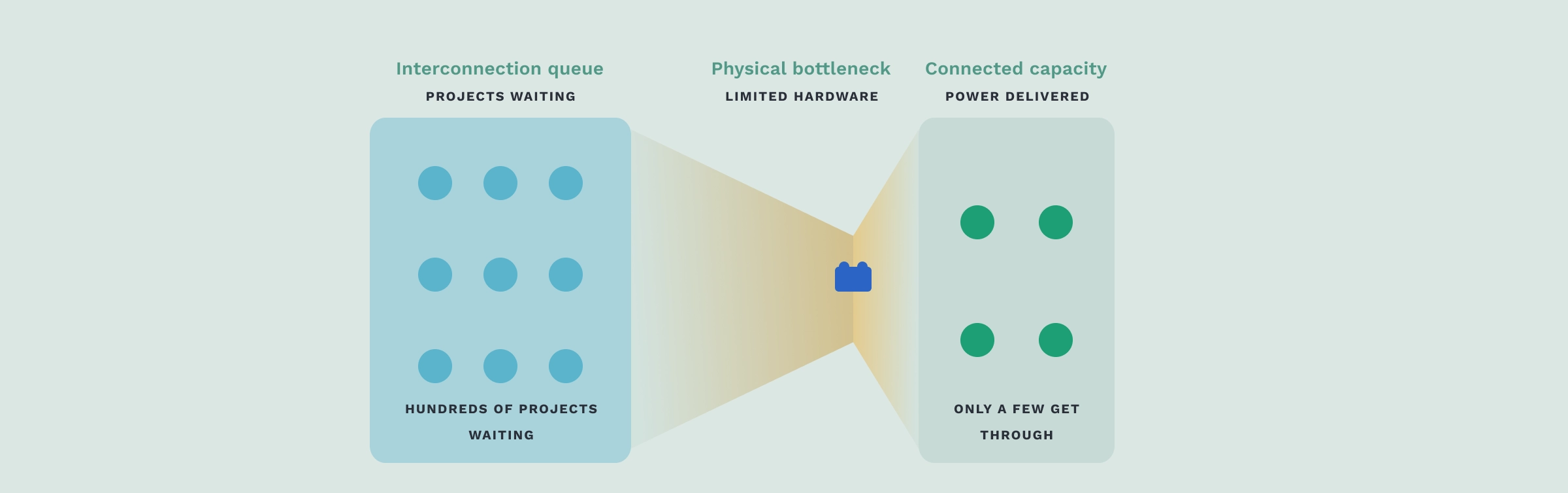
The International Energy Agency has been clear that grids are becoming a bottleneck for connecting new supply, demand, and storage.
More than 2,500 GW of renewable, large-load, and storage projects are currently stalled in grid connection queues worldwide. The IEA also says annual grid investment needs to rise by roughly 50% by 2030 from today's USD 400 billion to meet forecasted electricity demand.
Source: https://www.iea.org/reports/electricity-2026/grids
Source: https://www.iea.org/reports/electricity-2026/executive-summary
That is a big infrastructure story.
But infrastructure is never just one big thing.
It is thousands of practical decisions underneath it.
Which component is needed?
Which part record is correct?
Which transformer specification applies?
Which supplier can provide it?
Is there inventory somewhere else?
Is this a duplicate candidate?
Is there another supplier option or potential alternative worth reviewing?
The grid can be discussed at the level of policy, investment, and capacity.
But the work still comes down to equipment, parts, and decisions.
And those decisions get harder when the information is scattered.
This is not only a shortage story
Shortages are real.
Lead times are real.
Supply constraints are real.
But it is not that simple.
The U.S. Department of Energy says distribution transformers are facing supply-chain constraints, long lead times, and component shortages. DOE also identified more than 80,000 different distribution transformer varieties across the U.S.
Source: https://www.energy.gov/oe/distribution-transformers
Source: https://www.energy.gov/oe/supply-chain-and-market-analysis
That number stopped me.
More than 80,000 varieties.
That is not just a supply problem.
That is a complexity problem.
Too many specifications.
Too many part variations.
Too many legacy requirements.
Too many old records.
Too many disconnected systems.
Too many teams trying to figure out whether the part they need already exists, has an equivalent, has a supplier option, or is hiding under another description.
This is where the work slows down.
Because even when a team knows what needs to happen, the part decision may still be unclear.
What exactly is needed?
Which version matters?
Which identifier is correct?
Is there an equivalent specification?
Is this already in inventory?
Can another supplier support it?
Is the available option truly usable?
That is not a simple search problem.
It is a parts intelligence problem.

Utilities do not need more guessing
For energy and utility teams, the cost of uncertainty is high.
If a part is wrong, the work slows down.
If availability is unclear, planning gets harder.
If the record is incomplete, sourcing takes longer.
If supplier options are not visible, the team may default to the only known source.
If duplicate candidates are hiding in the system, inventory may be missed.
If specifications are unclear, people have to stop and verify before the work can move.
That is fair.
In utilities, no one should be guessing.
The problem is that the current information often makes teams do too much manual detective work.
A planner checks one system.
A buyer checks another.
A technician relies on what is visible in the field.
Someone looks for an old order.
Someone compares supplier records.
Someone asks the person who usually knows.
Sometimes that works.
But when the grid is under pressure and lead times are long, "ask around and search manually" is not good enough.
Teams need better context before the part decision becomes the bottleneck.
AI can help, but it is not magic
AI is part of this conversation, of course.
It should be.
But we need to be careful.
AI does not magically fix transformer shortages.
It does not create supply where none exists.
It does not remove the need for engineering judgment, procurement review, or utility standards.
And it should not pretend that every similar-looking part is automatically a safe replacement.
This is not about magic.
It is about making messy parts information usable.
AI becomes useful when it helps teams connect what they already have:
photos
labels
codes
part records
BoM context
supplier references
manufacturer identifiers
pricing and availability signals
duplicate candidates
historical purchases
potential alternatives
That is where it can help.
Not by replacing the decision.
By helping people get to a better decision faster.
The real question is: can the team act?
When critical infrastructure is waiting, the team does not just need more information.
They need information they can act on.
There is a difference.
More data can still leave people searching.
More records can still create confusion.
More supplier names can still leave the buyer unsure.
More part numbers can still hide the right match.
The useful question is:
Can the team identify, confirm, source, and trust the part well enough to move forward?
That is what matters.
Because the work does not wait for a perfect system record.
It waits for the right part decision.
Where Partium fits
Partium is built for these kinds of parts decisions.
Partium Find helps teams identify the right part from the information available in the moment: photos, labels, codes, descriptions, filters, BoM context, and existing part knowledge.
That matters when the starting point is not perfect.
And in energy and utilities, the starting point often is not perfect.
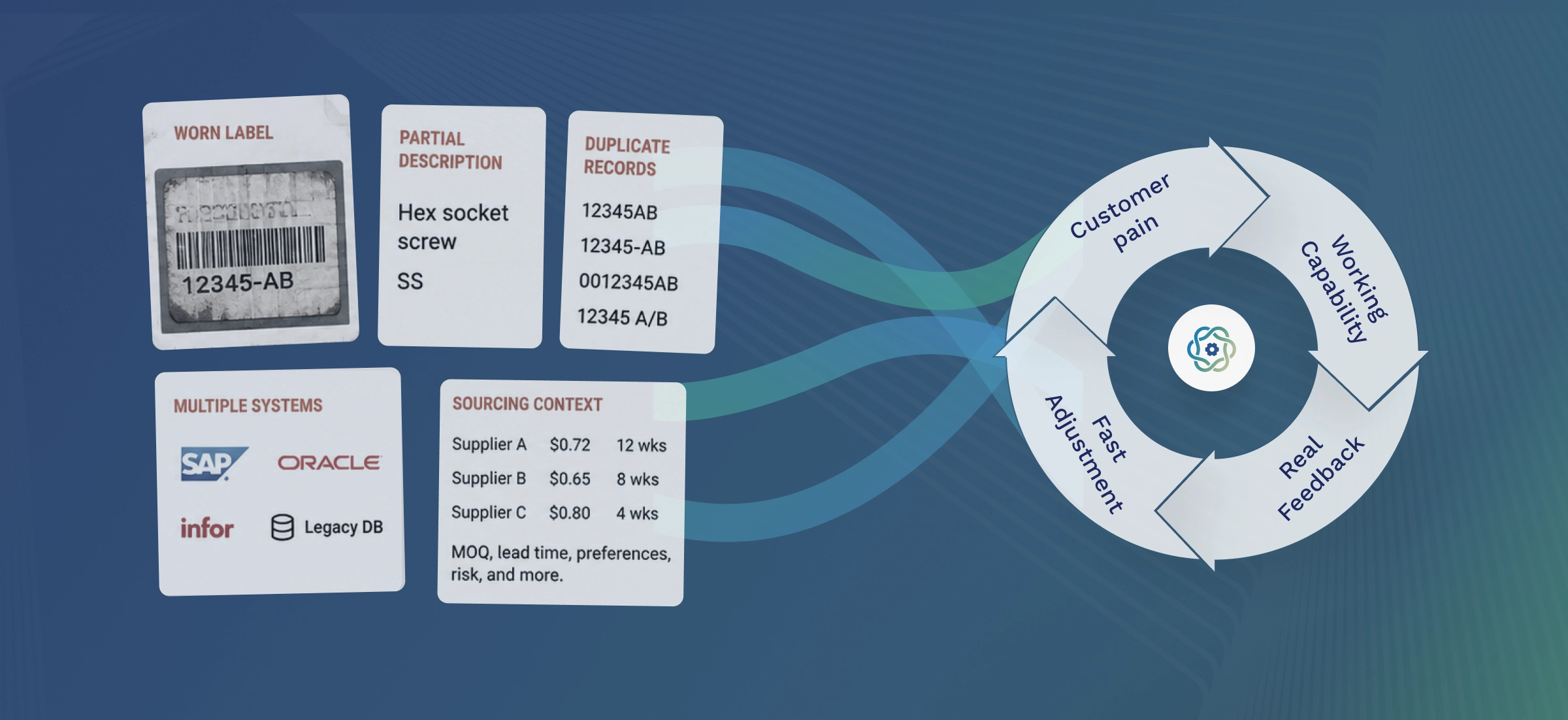
A label may be worn.
A part record may be incomplete.
A description may not match the field language.
The useful context may be spread across systems, supplier records, or old purchases.
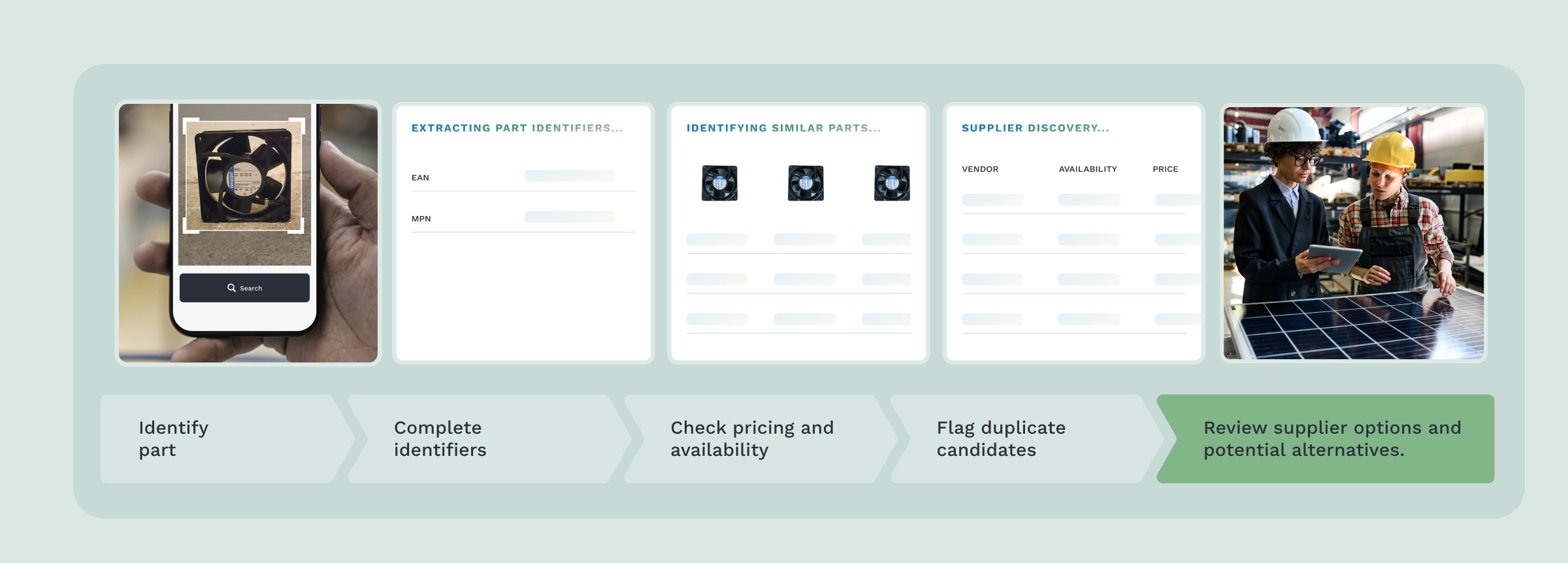
Partium Agent helps teams move from incomplete part records to decision-ready sourcing context by filling missing identifiers, comparing supplier pricing and availability, flagging duplicate candidates, and surfacing supplier options and potential part alternatives.
That matters because identifying the part is only one step.
The team may still need to understand availability, supplier options, duplicate candidates, and whether potential alternatives are worth reviewing.
Together, Find and Agent help teams move from unclear part information to better parts decisions.
The goal is not to replace expert judgment.
The goal is to reduce the manual search around the decision.
Big energy goals still depend on small part decisions
The future of AI, energy, and grid reliability will not only depend on big ideas.
It will depend on the practical work underneath them.
Can teams identify the right part?
Can they understand the specification?
Can they see supplier options?
Can they trust availability?
Can they spot duplicate candidates?
Can they review potential alternatives responsibly?
Can they move faster when the work cannot wait?
That is not very glamorous.
But it is very important.
Because AI needs power.
And power needs parts.