

Introduction
In maintenance, repair, and operations, the pressure usually shows up when something goes wrong.
A machine stops.
A technician needs a part.
The ERP record is incomplete.
The manufacturer number is missing.
The part description is unclear.
Procurement needs sourcing context fast.
Someone says, “Ask the person who usually knows.”
This is where reactive MRO begins.
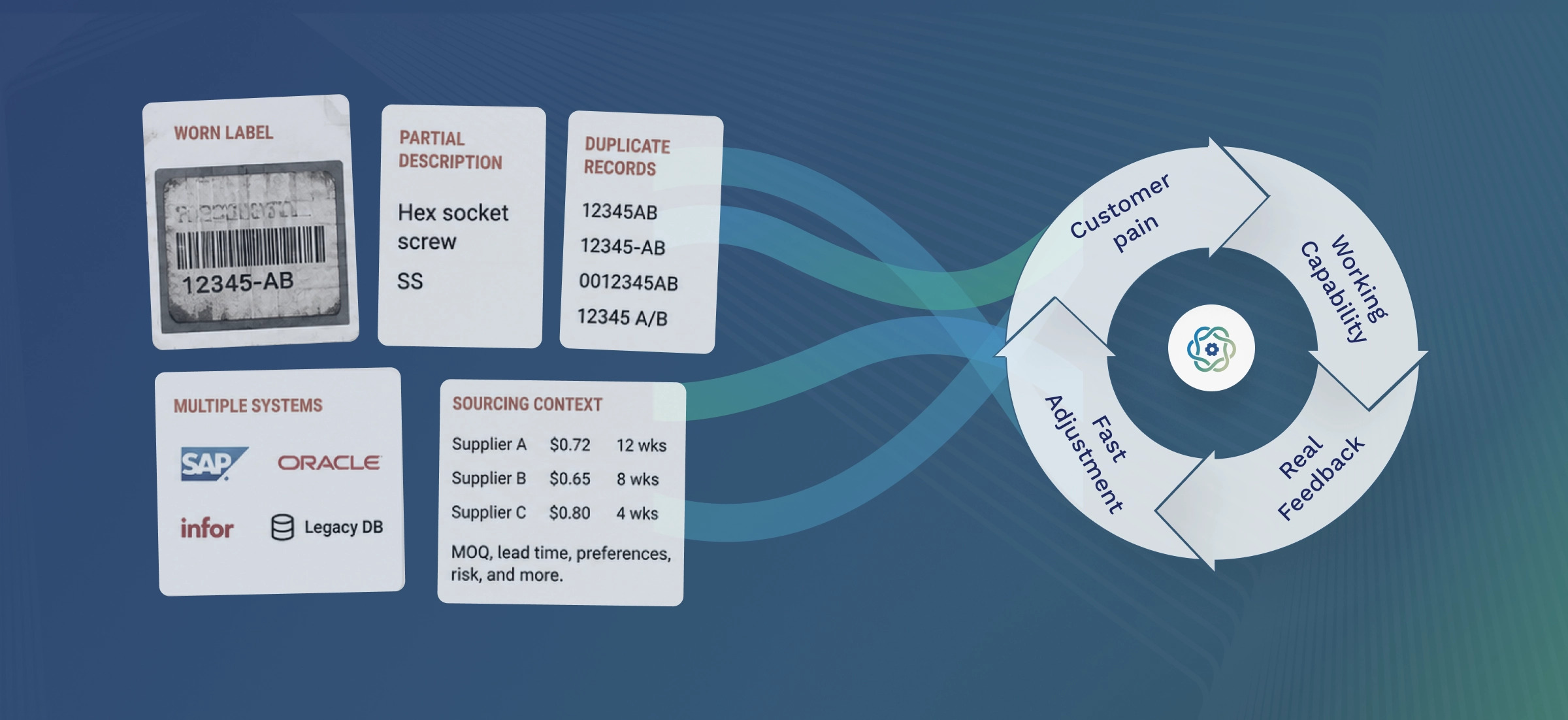
Not always at the moment of equipment failure, but often much earlier — when teams cannot confidently identify, validate, or source the right part.
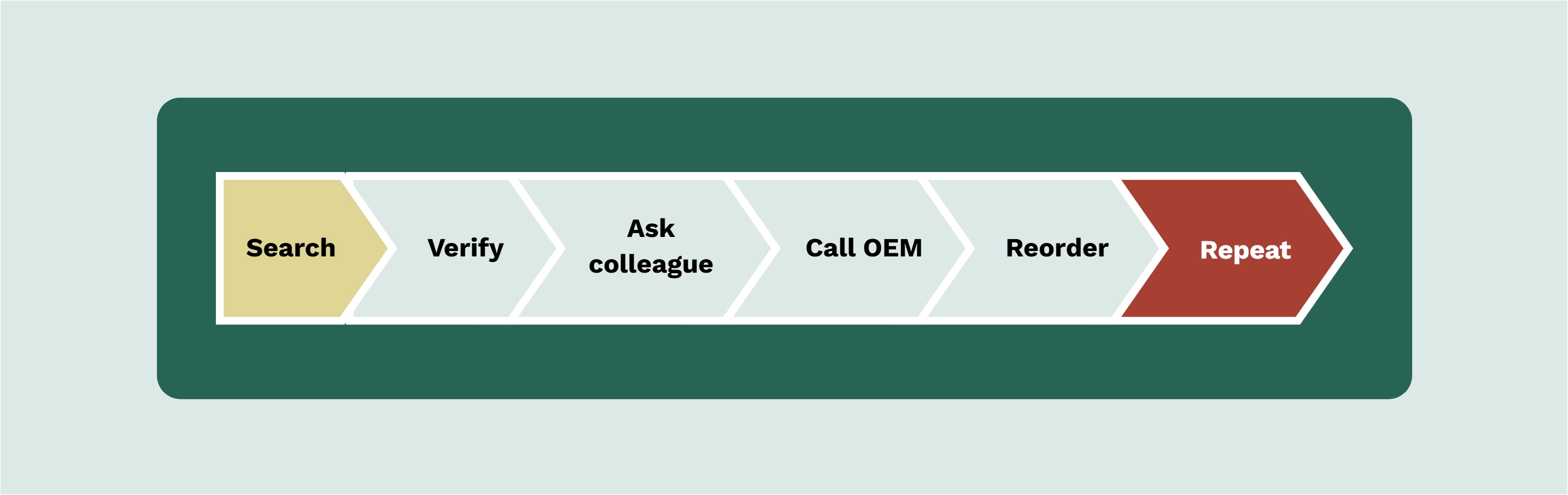
For many industrial organizations, maintenance teams have become very good at working around these problems. They search old purchase orders. They call suppliers. They compare photos. They ask colleagues. They reorder parts just to be safe.
Those workarounds keep operations moving.
But they also create hidden cost, delay, and risk.
The shift from firefighting to proactive MRO is not only about better maintenance planning. It also depends on better parts intelligence: the ability to find the right part faster, trust the available data, understand sourcing options, and make better decisions before urgency takes over.
This whitepaper explores how MRO teams can move from reactive parts work to more proactive, decision-ready operations.
1. Why firefighting still happens in MRO
Reactive MRO is rarely caused by one issue.
It is usually the result of many small gaps that compound over time:
- incomplete parts records
- duplicate candidates
- missing manufacturer numbers
- inconsistent descriptions
- unclear equipment relationships
- poor image coverage
- limited sourcing context
- unavailable or obsolete components
- too much knowledge living in people’s heads
When these gaps exist, even simple tasks become harder.
A technician may know what part is needed but not know how to find it in the system.
Procurement may receive a request but lack enough information to source confidently.
Inventory teams may hold duplicate or near-duplicate items without clear visibility.
Maintenance planners may struggle to understand whether a critical part is available, compatible, or already stocked somewhere else.
The result is not just slow search.
It is hesitation.
Teams spend extra time checking, confirming, asking, comparing, and validating before they feel safe enough to act.
That is the hidden burden of poor parts intelligence.
2. The parts problem behind reactive operations
Many companies think they have a maintenance problem, an inventory problem, or a sourcing problem.
Often, underneath those problems is a parts data problem.
If teams cannot trust the part record, they create their own workaround.
If the description is incomplete, they search manually.
If the manufacturer number is missing, they call the OEM.
If duplicate candidates exist, they reorder instead of checking stock.
If sourcing options are unclear, they default to the known path.
If the part cannot be identified quickly, downtime risk increases.
This is why proactive MRO requires more than predictive maintenance systems, planning tools, or dashboards.
Those tools are important.
But when the actual part decision is unclear, teams still get pulled back into reactive work.
A proactive operation needs decision-ready parts context.
That means teams need to understand:
- what the part is
- where it is used
- whether the record is complete
- whether duplicate candidates exist
- whether it is stocked
- whether sourcing options are available
- whether a replacement or alternative may need review
- whether the information is strong enough to act on
Without that context, MRO teams may still be proactive in planning but reactive in execution.

3. What proactive MRO really requires
Proactive MRO is not just about preventing equipment failure.
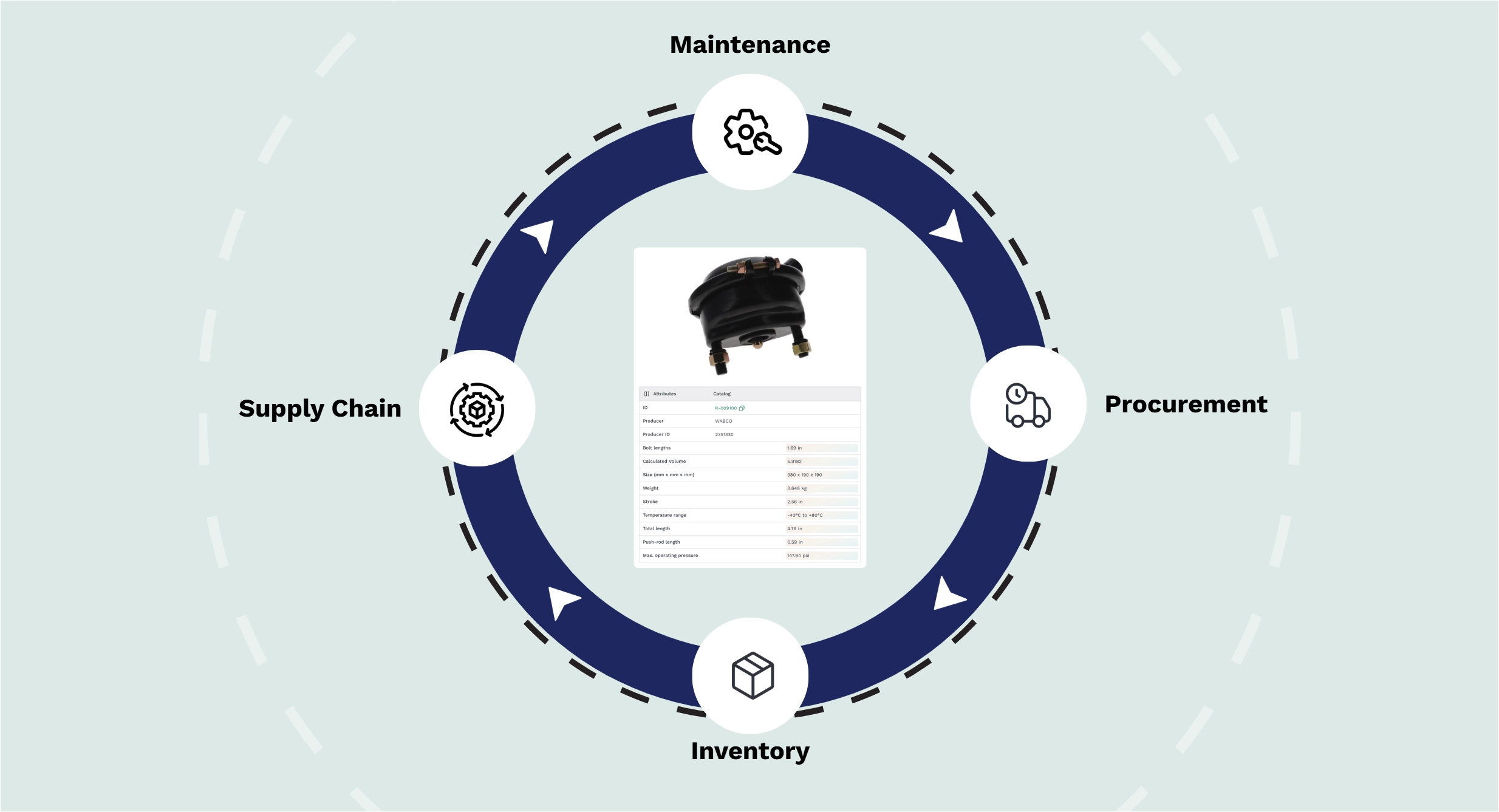
It is about reducing the uncertainty that slows maintenance, procurement, inventory, and supply chain teams when parts decisions need to be made.
A more proactive parts process requires five capabilities.
Faster part identification
Technicians and maintenance teams need to find the right part even when they do not have perfect information.
That may mean starting with:
- a photo
- a worn label
- a partial description
- an old part number
- a supplier reference
- an ERP or CMMS record
- a category or equipment relationship
When teams can search in more flexible ways, they are less dependent on perfect data entry or tribal knowledge.
More complete parts context
Finding a part is only the first step.
Teams also need context around the part:
- manufacturer information
- part numbers
- specifications
- images
- categories
- supplier information
- equipment relationships
- pricing and availability signals
- sourcing history
The more complete the context, the easier it becomes to make a confident decision.
Visibility into duplicate candidates
Duplicate or near-duplicate parts records create confusion across MRO, procurement, and inventory.
They can lead to unnecessary purchases, fragmented stock, inconsistent sourcing, and lower confidence in the system.
The goal is not to automatically declare or remove duplicates.
The goal is to surface duplicate candidates so teams can review them with better evidence.
Better sourcing intelligence
MRO decisions often involve procurement and supply chain.
When a part is needed, teams may need to understand supplier options, OEM dependency, availability, pricing, country of origin, specifications, and possible alternatives.
Without this context, the safest path often becomes the familiar path.
Better sourcing intelligence gives teams more evidence before they decide.
Cross-team decision support
Parts decisions rarely belong to one team.
Maintenance understands the urgency.
Procurement understands the supplier path.
Inventory understands stock.
Supply chain understands availability and risk.
Engineering or reliability may need to validate compatibility.
Proactive MRO depends on giving these teams a clearer shared view of the part decision.
4. The role of AI in modern MRO
AI is often discussed in maintenance through the lens of prediction: predicting failure, predicting demand, predicting risk.
That matters.
But in day-to-day MRO, AI can also help with something very practical:
Helping teams get to the right parts decision faster.
AI-powered parts intelligence can support teams by:
- identifying parts from images
- interpreting incomplete or inconsistent descriptions
- reading labels, plates, documents, and supplier records
- connecting related part records
- enriching missing information
- surfacing duplicate candidates
- investigating supplier and OEM context
- identifying potential alternatives for review
- helping teams understand where confidence is strong and where human validation is still needed
The value is not simply more data.
MRO teams already have plenty of data.
The value is better evidence, better context, and better decision support.
The best AI does not pretend uncertainty does not exist. It helps teams understand what is known, what is likely, what needs review, and where action should start.
"AI is not useful because it gives MRO teams more data. It is useful when it helps them reach a better parts decision faster"
5. From reactive response to proactive parts decisions
The shift from firefighting to proactive MRO is a shift in how teams work with parts information.
This is the practical difference.
Proactive MRO does not mean every problem disappears.
It means teams are better prepared before the problem becomes urgent.
They can find the part faster.
They can understand the available context.
They can identify where data is missing.
They can review duplicate candidates.
They can investigate sourcing options.
They can make better decisions with less manual work.
That is how MRO becomes less reactive.
6. Business impact: where better parts intelligence helps
When MRO teams improve parts intelligence, the benefits can show up across the operation.
Less time lost searching
Technicians and planners can spend less time trying to identify the right part and more time focused on the work that keeps equipment running.
Fewer dead ends
Flexible search methods and enriched parts context help reduce the number of searches that end in uncertainty, escalation, or manual workaround.
Better inventory visibility
Duplicate candidates, incomplete records, and unclear descriptions can make inventory harder to trust. Better parts intelligence helps teams understand what they have and where review is needed.
Improved sourcing flexibility
When procurement has better part context, supplier information, and potential alternatives to review, sourcing decisions can become less dependent on incomplete data or default paths.
Stronger collaboration
Maintenance, procurement, supply chain, and inventory teams can work from a clearer shared understanding of the part, the data, and the decision.
More confident decisions
The real value is trust.
A part record is only useful if people trust it enough to act.
When teams have better evidence, they can move faster with more confidence.
"A part is only useful if people trust it enough to act."
7. What to look for in a modern Parts Intelligence approach
A modern Parts Intelligence approach should support the way MRO teams actually work.
That means it should help users search, validate, enrich, and act across imperfect parts environments.
Key capabilities to look for include:
- visual search for identifying parts from images
- semantic search for incomplete or inconsistent descriptions
- OCR for labels, documents, plates, and supplier references
- ERP, CMMS, and procurement system integration
- duplicate candidate detection
- parts enrichment
- manufacturer and supplier context
- pricing and availability signals
- sourcing alternatives for review
- obsolescence and lifecycle signals
- human validation workflows
- clear evidence trails
The goal is not to replace existing ERP, CMMS, or procurement systems.
The goal is to make the parts context inside and around those systems more useful, searchable, and decision-ready.
8. Where Partium fits
Partium helps industrial teams move from slow, manual parts work to faster, more trusted parts decisions.
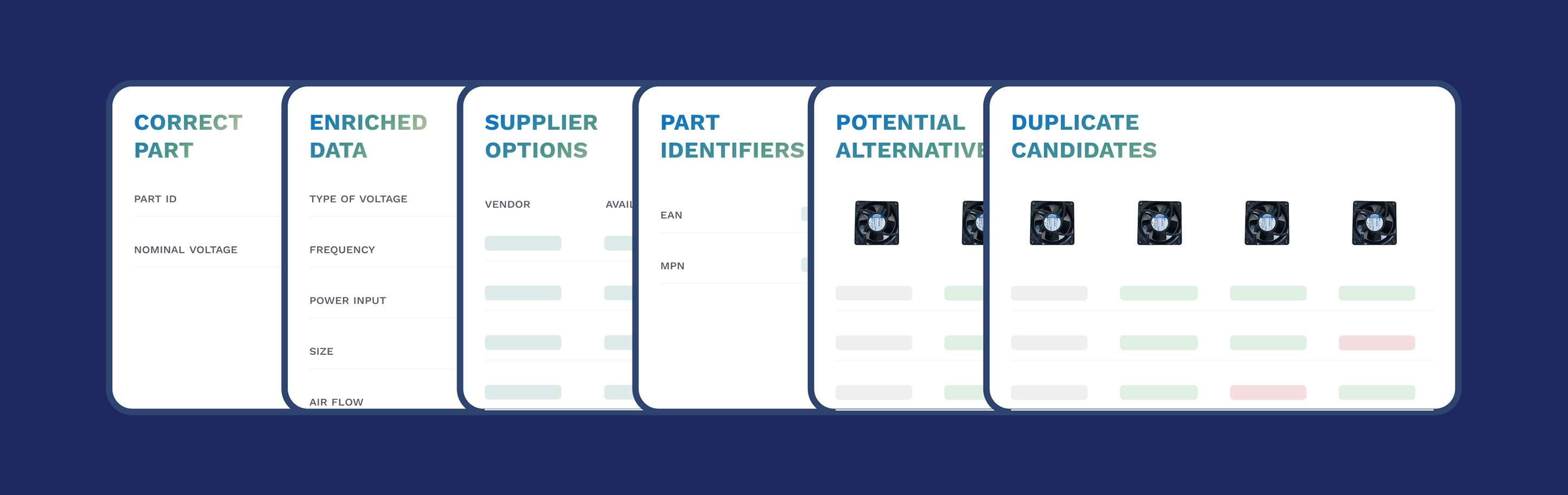
The Partium Parts Intelligence Platform supports teams across the parts lifecycle, from identification to enrichment to sourcing investigation.
With Partium, teams can:
- find the right part faster using visual, semantic, text, OCR, and code-based search
- improve parts records with more complete context
- surface duplicate candidates for review
- investigate supplier, OEM, pricing, availability, and sourcing information
- support better collaboration across maintenance, procurement, supply chain, and aftersales workflows
For MRO teams, this means less time lost in manual search and more confidence in the information behind the decision.
For procurement and supply chain teams, it means better sourcing context and more visibility into supplier options.
For the business, it means fewer parts decisions made in the dark.
Conclusion
The future of MRO is not just more proactive maintenance.
It is more proactive parts decisions.
Because even the best maintenance strategy can slow down when teams cannot identify the right part, trust the record, understand availability, or evaluate sourcing options.
Moving from firefighting to proactive operations means giving teams better parts intelligence before urgency takes over.
It means reducing manual searching, checking, and rechecking that happens every day.
It means helping maintenance, procurement, inventory, and supply chain teams work from better evidence.
And it means building trust in the parts information people need to keep operations moving.
The companies that make this shift will not just respond faster when something breaks.
They will be better prepared before it is done.