

The OEM is often treated as the safest source.
And sometimes, it is.
The OEM may be the right supplier.
The OEM may have the correct part.
The OEM may be the approved path.
The OEM may be the only option that makes sense.
But in many industrial sourcing workflows, there is a harder question worth asking:
Is the OEM the only known source, or just the only source currently visible?
That question matters.
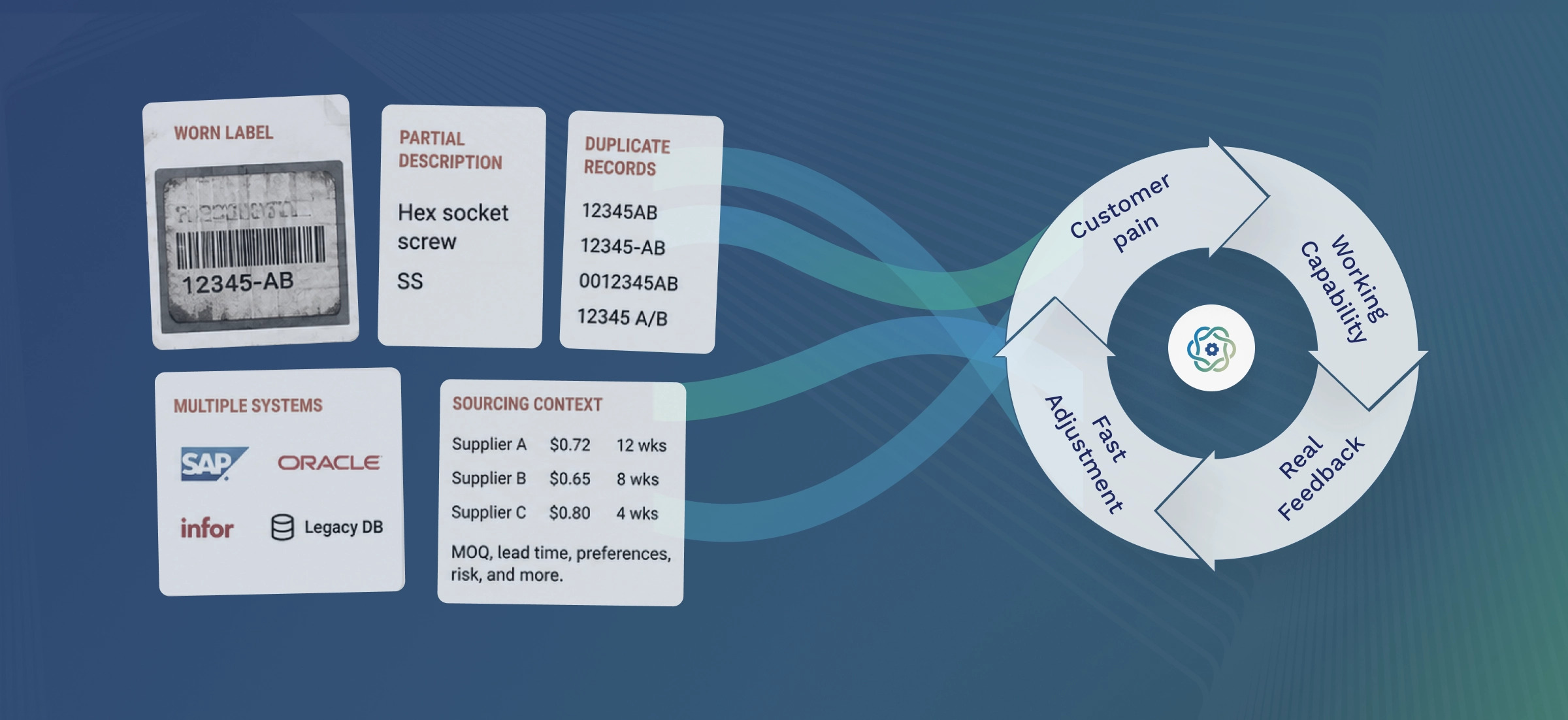
Because when a part record is incomplete, the sourcing team may not be seeing the full picture.
A manufacturer identifier may be missing.
A supplier number may not be connected to the OEM reference.
A duplicate record may hide another source.
A historical purchase may exist under a different description.
A potential alternative may not be visible.
Pricing and availability may be scattered across systems or suppliers.
So the buyer defaults to the source they can see.
Not always because it is the only source.
But because it is the only source the current part context makes visible.
That is the real supplier discovery problem.
That is the real supplier discovery problem.
The OEM may not be the only source
Supplier discovery often gets framed as a supplier search problem.
Find more suppliers.
Add more vendors.
Expand the database.
Search broader catalogs.
Build more resilience.
All of that can help.
But for industrial parts, supplier discovery often breaks down before the supplier search even starts.
The team first has to understand the part.
What exactly is it?
Which identifiers matter?
Which supplier numbers connect to which manufacturer numbers?
Has it been bought before under another name?
Are there duplicate candidates in the system?
Is the OEM truly the only source?
Or is it just the only source visible from the current record?
That is why supplier discovery is not only about access to supplier data.
It is about part context.
Supplier discovery often starts too late
Many sourcing workflows begin only after the problem is already visible.
The usual supplier has a long lead time.
The OEM price is high.
Availability is unclear.
A part is obsolete or hard to find.
A maintenance team needs the part quickly.
A buyer is asked to find another option.
By then, the sourcing team is already under pressure.
But the real issue may have started earlier, inside the part record.
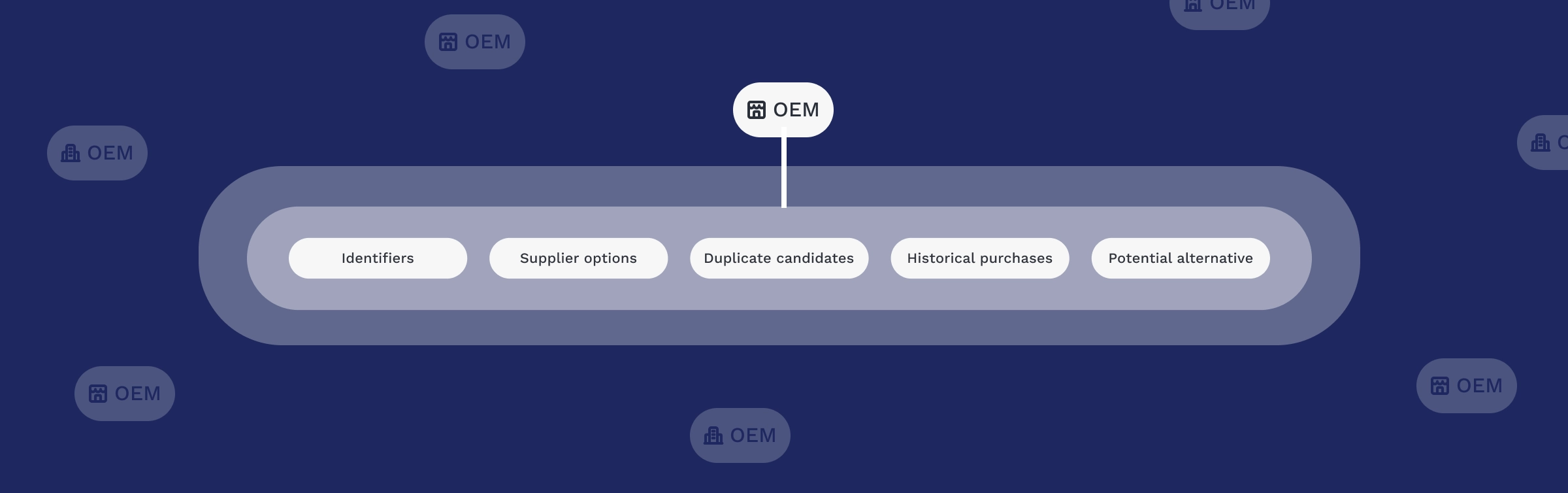
The identifier may be missing.
The manufacturer number may not be connected to the supplier number.
The internal description may be incomplete.
Duplicate candidates may exist in the system.
The part may have been purchased under different names over time.
Pricing and availability may be scattered across suppliers.
Potential alternatives may not be visible.
That is why supplier discovery can become manual so quickly.
Teams search supplier sites.
They compare old purchase records.
They ask colleagues.
They check catalogs.
They open spreadsheets.
They default to the known source because it feels safer.
That is not only a supplier problem.
It is a part context problem.
The market is moving toward supplier intelligence
The broader procurement market is already moving toward more intelligence-driven sourcing.
Amazon Business describes supplier market intelligence as a way for procurement teams to move from reactive purchasing to more data-driven sourcing decisions, with clearer visibility into supplier performance, pricing trends, and sourcing risks before market conditions force a reaction.
Source: https://business.amazon.com/en/blog/supplier-market-intelligence
Gartner has also identified AI adoption across autonomous sourcing, supplier intelligence, intake automation, and agent-driven source-to-pay as an important area for procurement leaders.
Source: https://www.gartner.com/en/documents/7648561
The direction is clear: supplier discovery is becoming more intelligence-driven.
But there is a missing piece in many conversations.
Supplier intelligence is only useful if the team also has strong part intelligence.
A supplier list does not help much if the part is poorly understood.
Before a team can confidently evaluate supplier options, it needs to know what it is actually sourcing.
Supplier discovery is not just "find me another vendor"
Industrial sourcing is different from simple vendor search.
For many parts, the sourcing question is not:
Who sells something like this?
The better question is:
What exactly is this part, and which options can we responsibly review?
That requires context.
Which identifiers matter?
Which manufacturer and supplier numbers are connected?
Is the OEM the only known source, or just the only source currently visible?
Are there duplicate records hiding under different descriptions?
Is availability visible?
Is pricing current?
Are there potential part alternatives worth reviewing?
Is the information strong enough to make a sourcing decision?
That is why supplier discovery cannot be separated from part data quality, part identification, and part context.
The sourcing team is not just looking for another name in a supplier database.
They are trying to make a decision under uncertainty.
And the less context they have, the more manual that decision becomes.
This is also an MRO problem
Supplier discovery may sit with procurement, but the consequences often show up in maintenance.
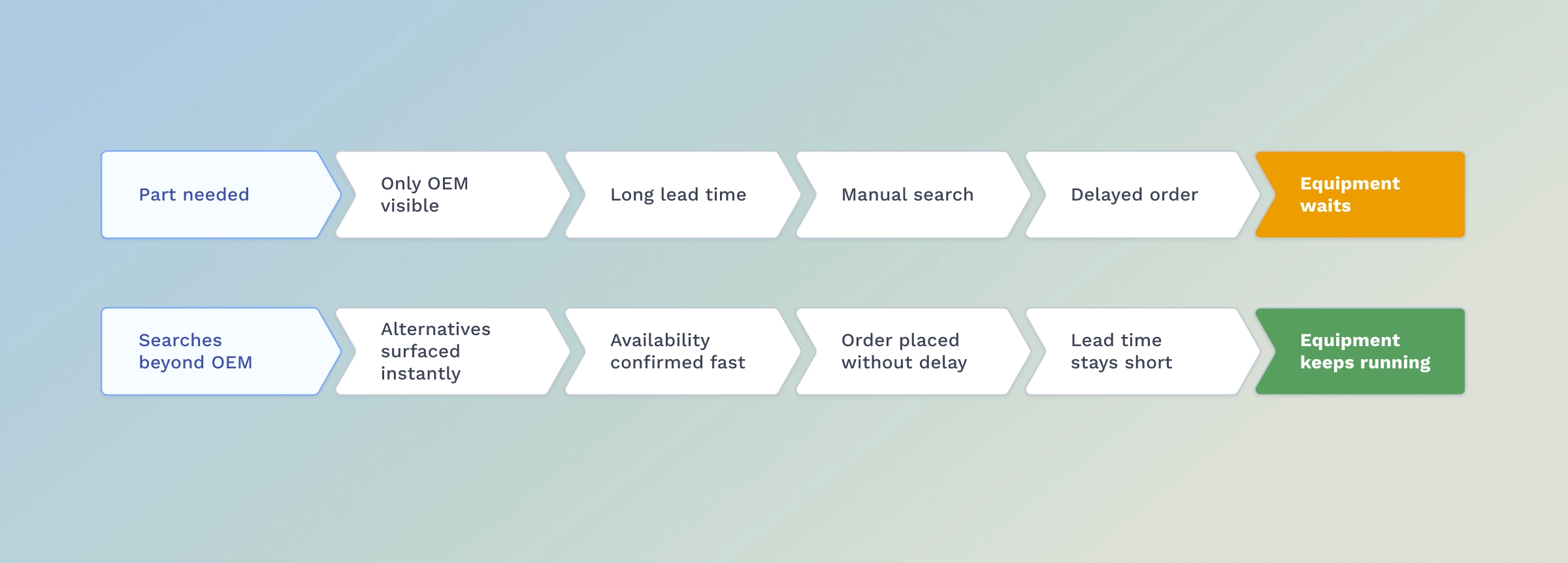
If a critical part cannot be sourced quickly, the maintenance team waits.
If the buyer cannot confirm the right identifier, the repair slows down.
If the only visible source has a long lead time, the asset stays at risk.
If duplicate records hide inventory that already exists, the organization may buy a part it did not need to buy.
If potential alternatives are not visible, the team may miss options that could have been reviewed.
This is why MRO, procurement, and supply chain cannot treat parts information as separate problems.
IATA recently called for urgent action to ease engine MRO bottlenecks, pointing to spare parts shortages, limited spare engine availability, constrained aftermarket access, and the need for better access to spare parts and approved repair options.
IATA also called for better integration between maintenance systems and external market intelligence to improve inventory management, identify material availability and scarcity, support repair-or-replace decisions, and reduce manual work with AI.
Those aviation examples are industry-specific, but the underlying issue is much broader.
Parts-heavy organizations need better ways to connect maintenance needs, part records, supplier visibility, and sourcing decisions.
AI can help, but only if it works with the right context
AI is becoming part of the procurement and supply chain conversation, but it should not be treated as magic.
The Financial Times recently wrote that AI is reshaping supply chains by helping synthesize complex, cross-functional data into actionable insight. But the same article also noted that adoption depends on digital readiness, cohesive data, clear performance metrics, and trust.
Source: https://www.ft.com/content/3f773f4b-efaf-4bb4-953a-ff19863b2973
That distinction matters.
AI cannot make a confident sourcing recommendation from weak context.
If the part record is incomplete, the agent has less to work with.
If supplier numbers and manufacturer numbers are disconnected, comparison becomes harder.
If duplicate candidates are not visible, the team may miss existing inventory or split demand across records.
If pricing and availability are scattered, the buyer has to piece the picture together manually.
For supplier discovery, AI becomes useful when it helps teams complete the context around the part.
Not when it simply returns a longer list of possible suppliers.
Better supplier discovery starts with better questions
The old sourcing question was often:
Who else can supply this?
The better question is:
Do we understand this part well enough to know which supplier options are worth reviewing?
That shift matters.
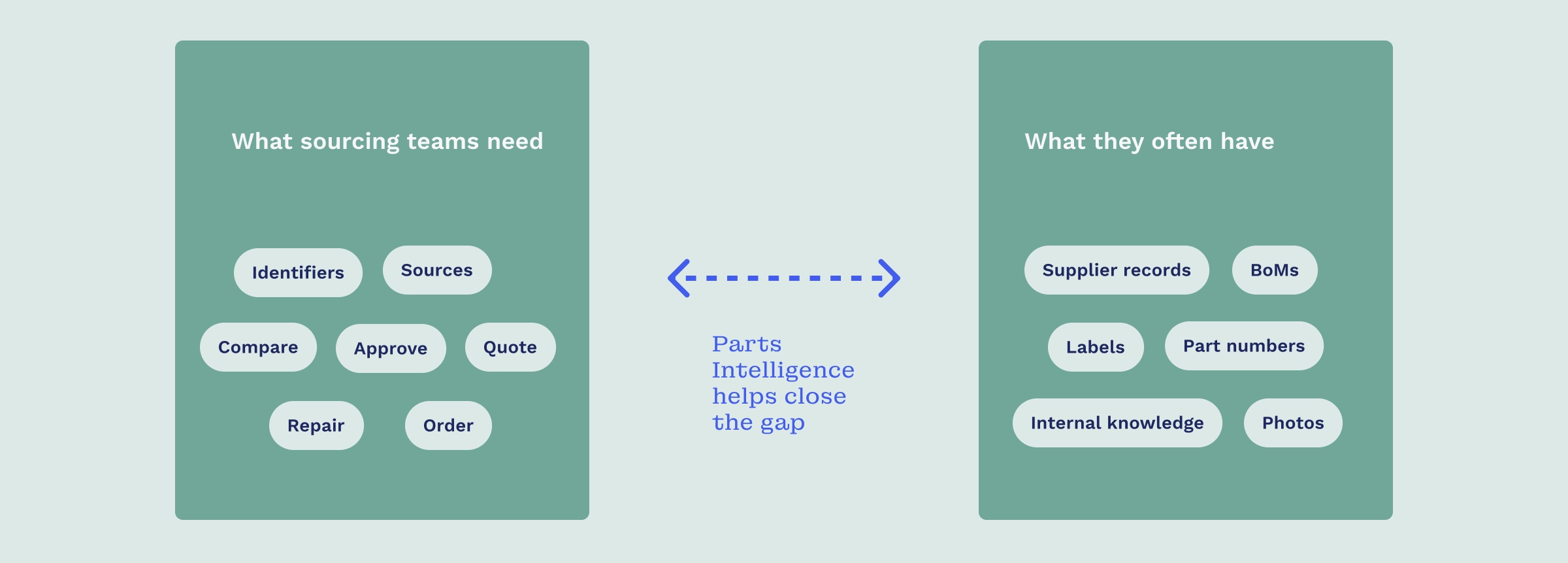
Supplier discovery improves when teams can answer questions like:
What is the correct manufacturer identifier?
What supplier numbers are linked to this part?
Is this part duplicated elsewhere in the system?
Do we have pricing and availability context?
Are there other suppliers already connected to similar records?
Are there potential part alternatives that should be reviewed?
Is this a part we have sourced before under another name?
Is the OEM truly the only option, or just the only option currently visible?
Is the sourcing decision urgent because of maintenance, service, or lead-time risk?
Those questions turn supplier discovery from a blind search into a better decision process.
Where Partium fits
Partium Agent is built for this problem.
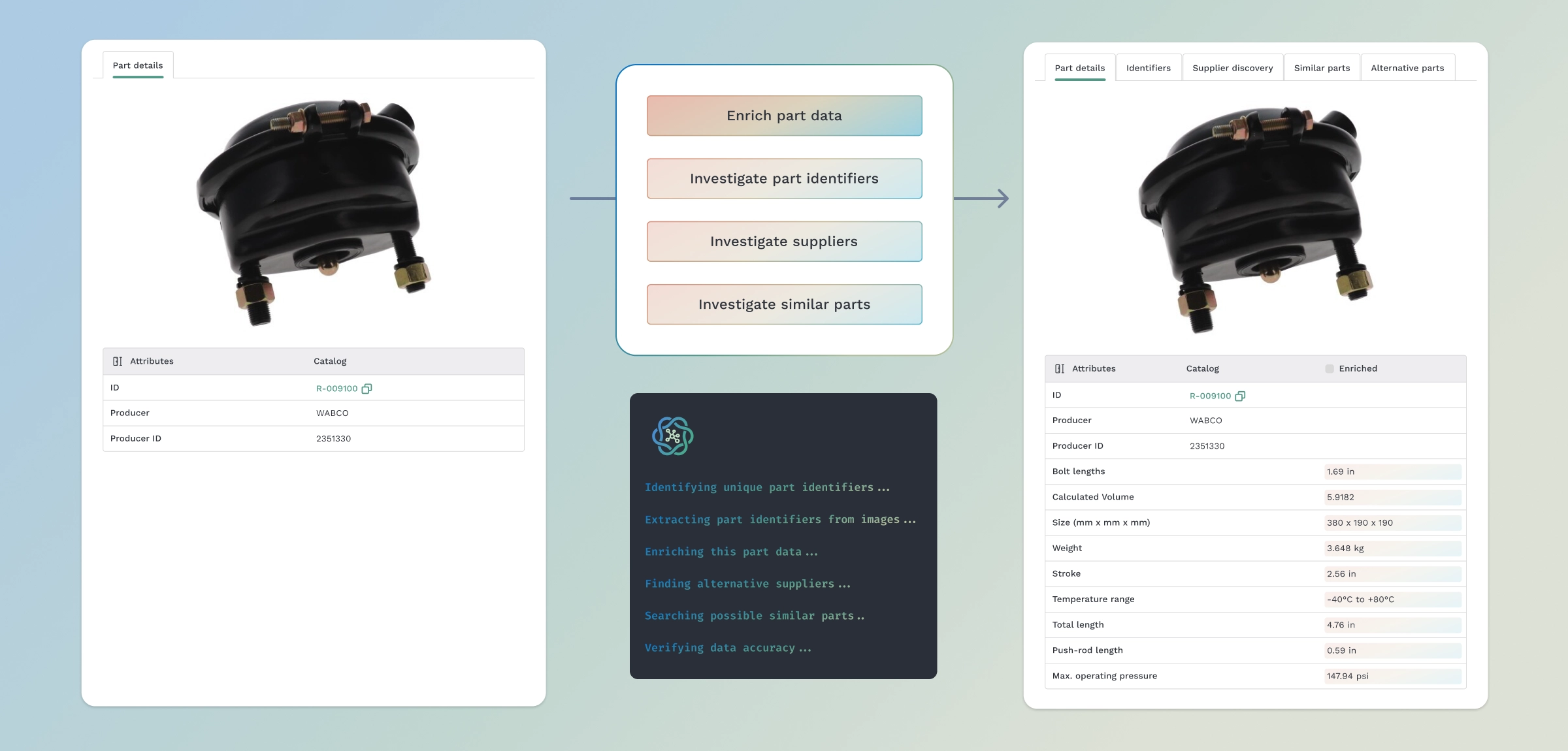
It helps teams move from incomplete part records to decision-ready sourcing context.
That can include filling missing identifiers, comparing supplier pricing and availability, flagging duplicate candidates, and surfacing supplier options and potential part alternatives.
The goal is not to replace sourcing judgment.
And it is not to guarantee lower cost.
The goal is to give procurement, supply chain, and MRO teams better context before they make the sourcing decision.
Because supplier discovery should not begin with a blank search.
It should begin with a clearer understanding of the part.
Supplier discovery is becoming a parts intelligence problem
The next phase of supplier discovery will not be defined only by who has the largest supplier database.
It will be defined by who can connect supplier options to the right part context.
That means understanding the part.
Connecting identifiers.
Seeing pricing and availability.
Flagging duplicate candidates.
Surfacing supplier options.
Reviewing potential alternatives.
Supporting the buyer with context before the decision is made.
For procurement and supply chain teams, that means fewer blind searches and better sourcing conversations.
For MRO and maintenance teams, it means fewer delays caused by unclear part information.
For the business, it means more resilience when the usual source is not enough.
Supplier discovery is not just about finding another supplier.
It is about understanding the part well enough to know which options are worth reviewing.